Expecting the Unexpected Weaving Krokbragd at West Dean.

TEACHING WEAVING KROKBRAGD AT WEST DEAN COLLEGE. JANUARY 2026

For me, teaching at West Dean College of Art, Design Craft and Conservation was about much more than teaching.

I suspected this might be the case as other makers and friends have raved about the college over the years. I was curious to find out what the fuss was about. However, I didn’t anticipate is that a teaching gig would bring about a shift in mindset about the future direction of my business.

A soggy Sunday afternoon drive from Bristol to Chichester was the start of my experience. I loaded up the car with my pre-set student looms and triple checked the workshop kit list. I’m lucky to have a ‘weaving krokbragd’ workshop template that easily adapts to different educational settings. It’s provided financial security in my weaving business for a while now, as well as other benefits. (I’ve put in the years to reach this point).
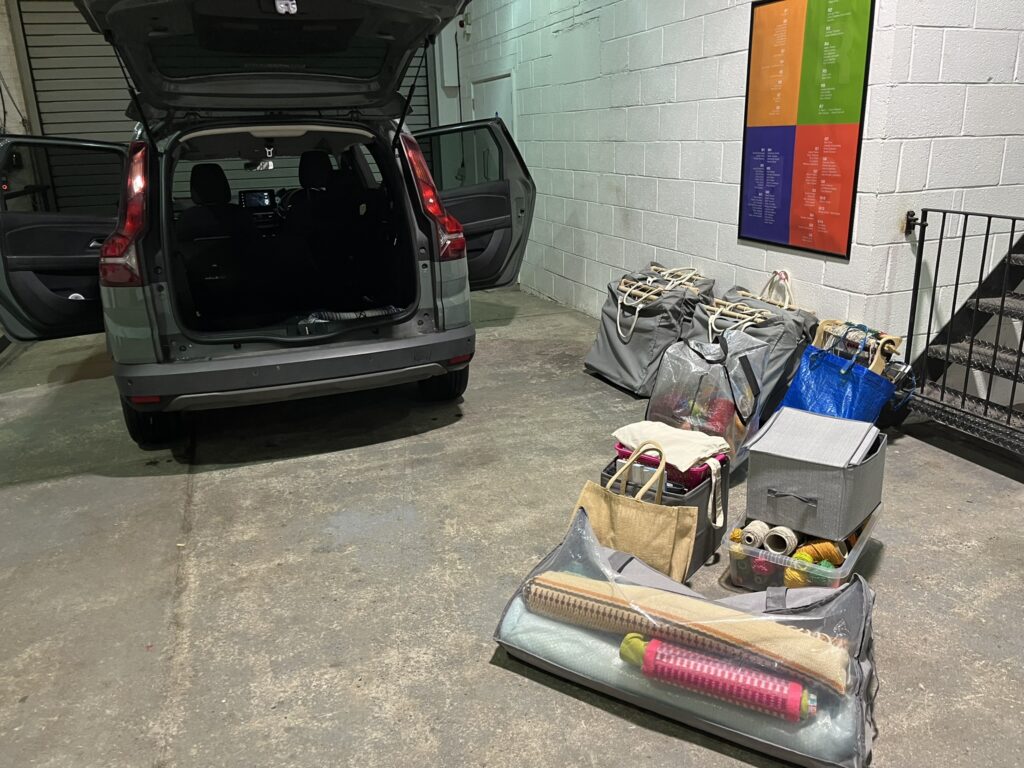
Loading the car at BV Studios, Bristol

Packing & Unpacking

I was booked to teach a three-day weaving krokbragd workshop. On arrival, I crawled along the very impressive driveway to the majestic entrance of the house. The first evening was all about unloading, setting up, dinner and then welcoming the students with a short introduction. Plus an impromptu loom dressing session! (The course bookings had exceeded expectations. Rather than give up my teaching loom to make up the numbers, one of the students kindly agreed to bring their loom in exchange for an extra long sampling warp).

Exploring the house and estate would have to wait as it was dead of night by the time I finished. After a long day, sleep was calling me. 
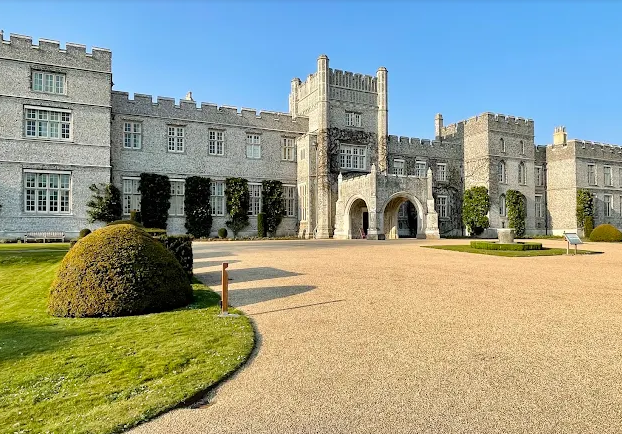
The impressive driveway was much drizzlier when I arrived in January 2026.

Teaching Weaving Krokbragd

The course followed a typical workshop structure and I enjoyed teaching another lovely group of students. We began by working through the basic principles of the three-shaft boundweave technique together. The students then started finding their own rhythm by designing from the pattern templates that I had prepared.

KROKBRAGD Contemporary Weaver With Colour by Angie Parker
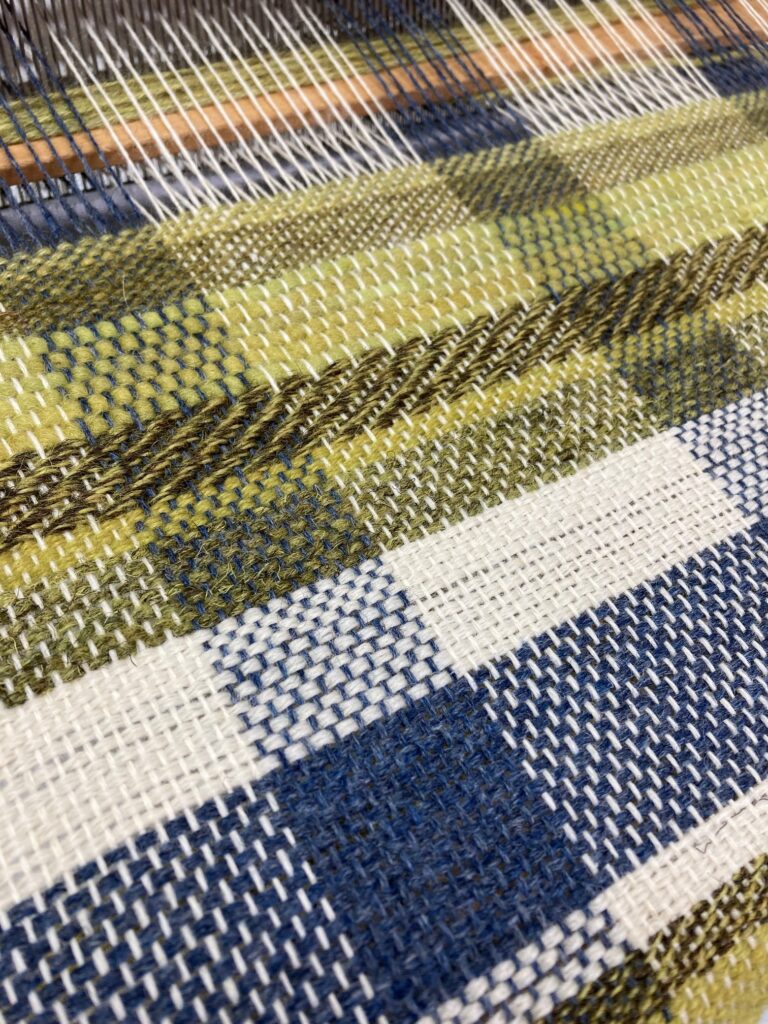
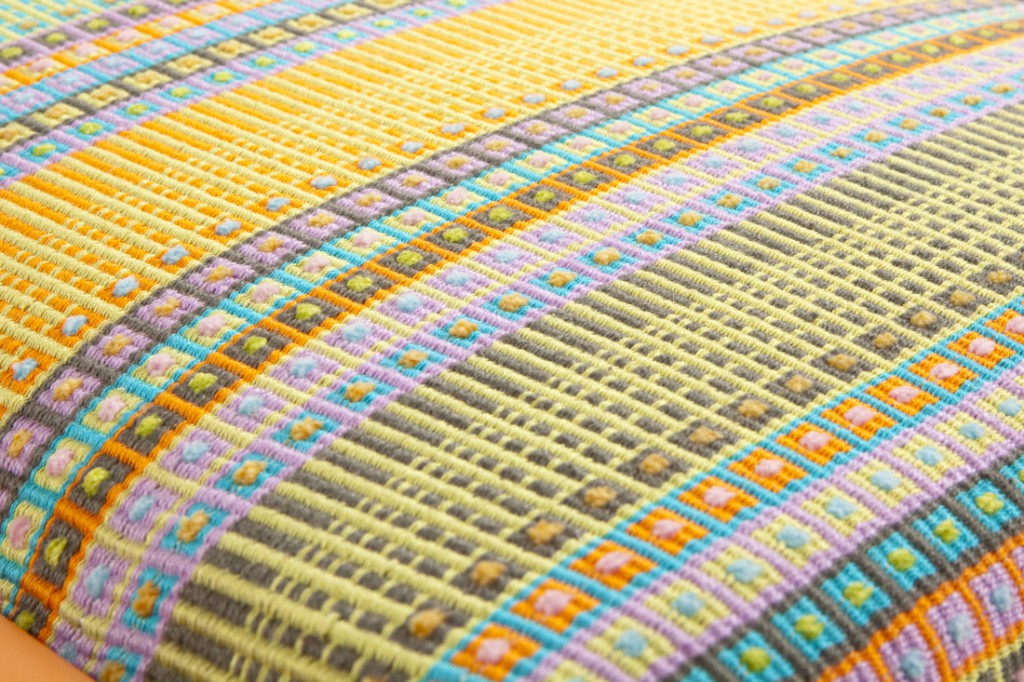
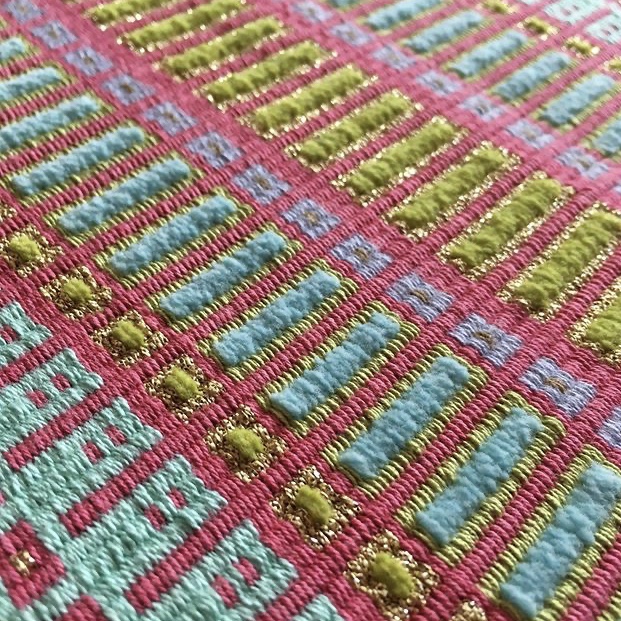
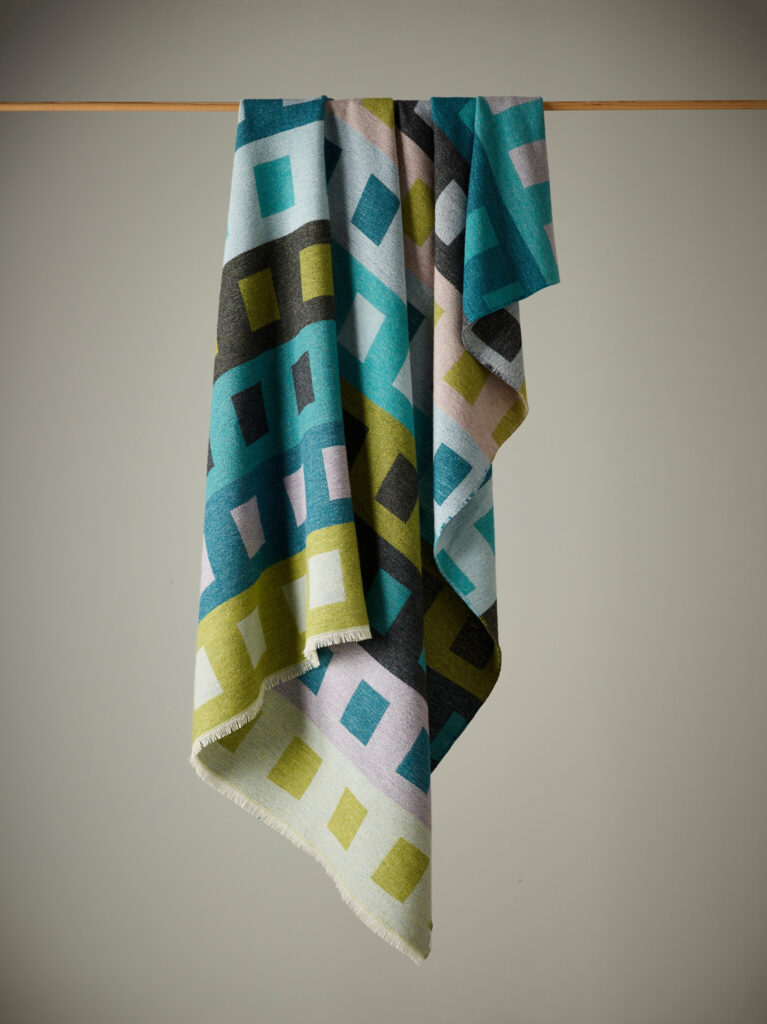
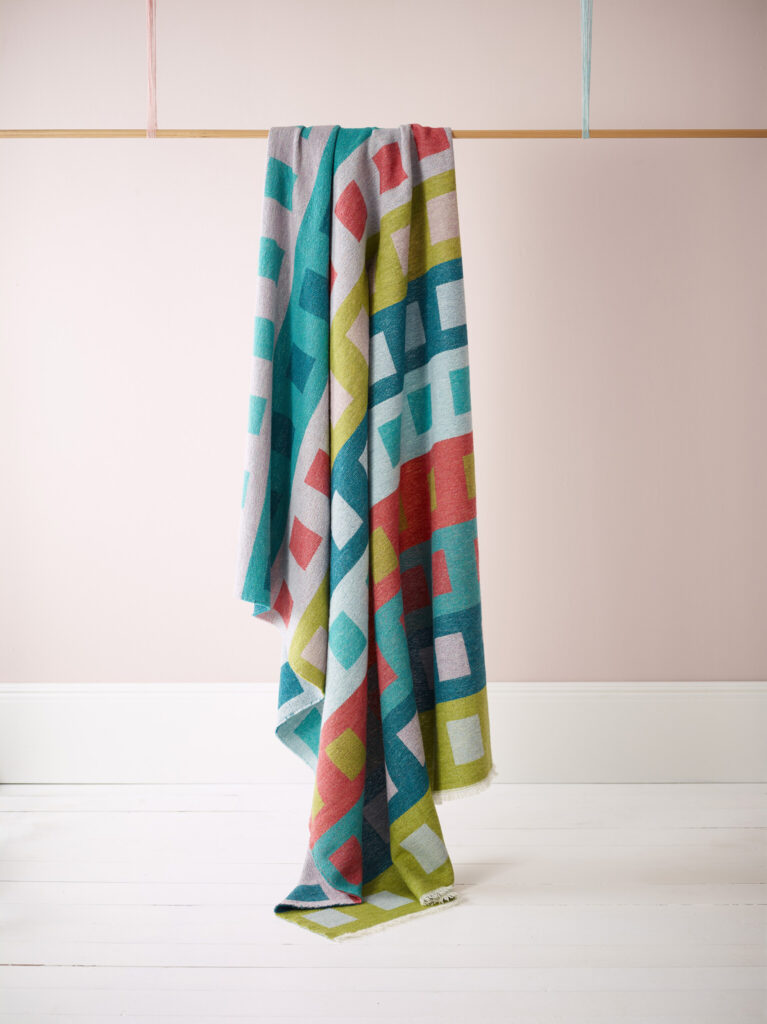
An example of the woven krokbragd patterns that I teach on the course.

We discussed their aims and expectations so that I could ensure the course covered everything they wanted. I was able to adapt so that each student was pushed in their learning. My hope is for the participants to master enough of the weaving krokbragd building blocks so that they can work on developing their own patterns and style. You can read more about my weaving krokbragd courses here. (Coming soon actually).
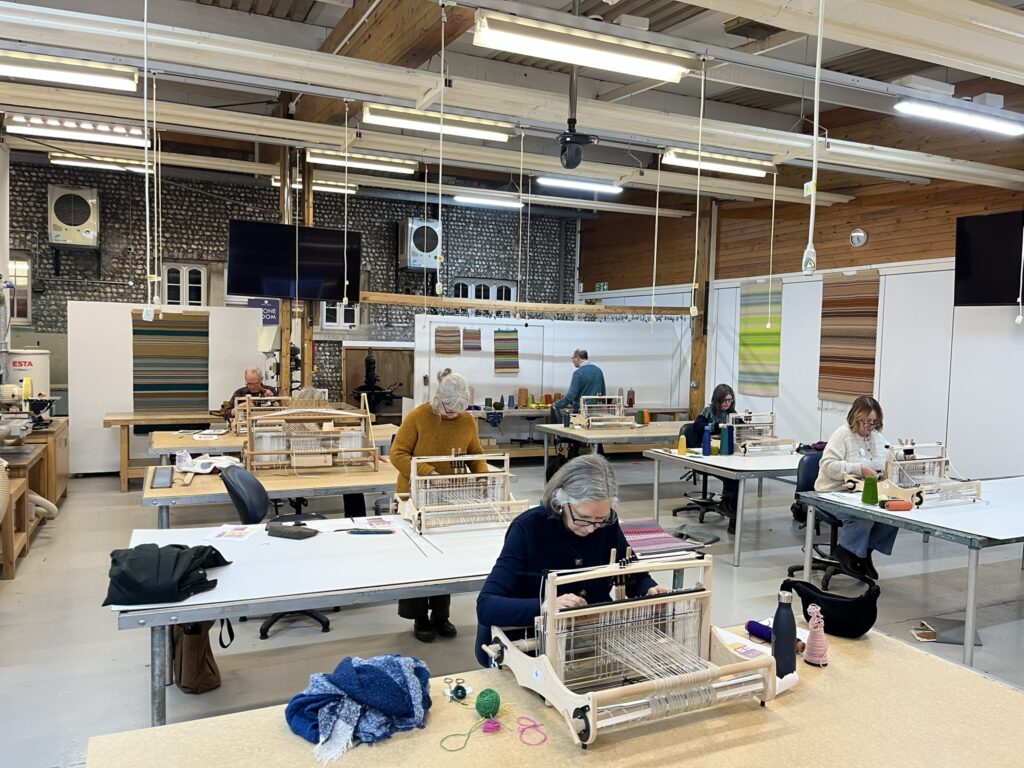
The workshop space at West Dean was spacious and well suited for weaving on the table looms

The group worked really well together and it was lovely to witness the ‘lightbulb’ moments and see the weaving progress on the looms. We also covered design, colour, rug techniques, selvedges, setts, materials and more….
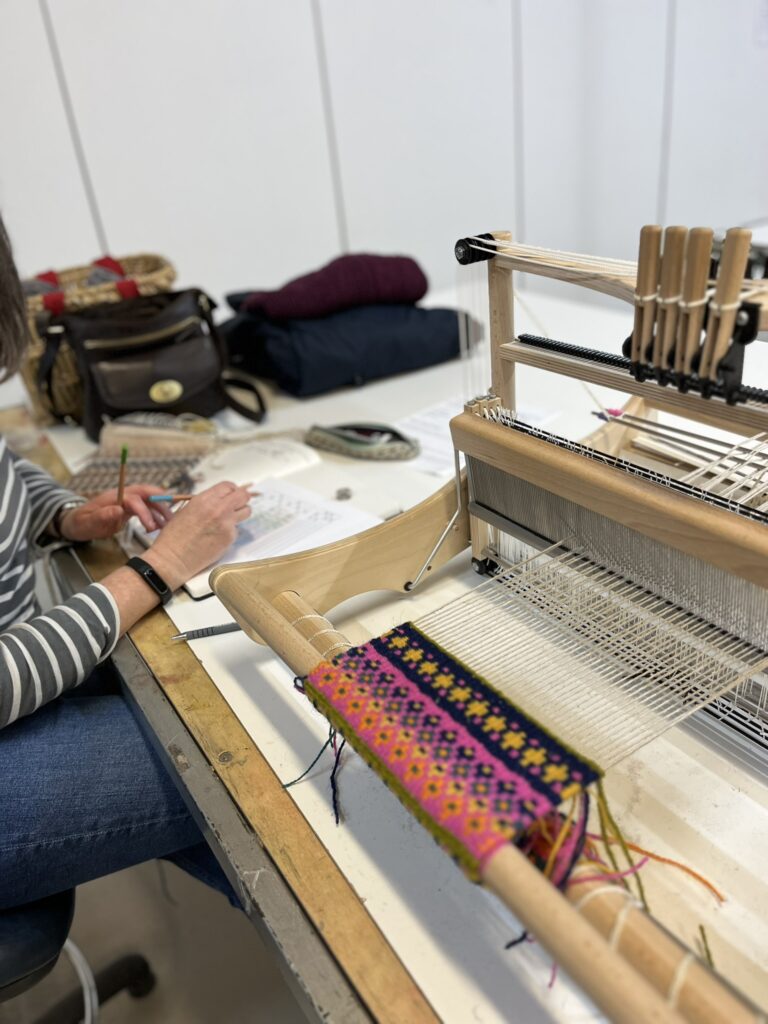
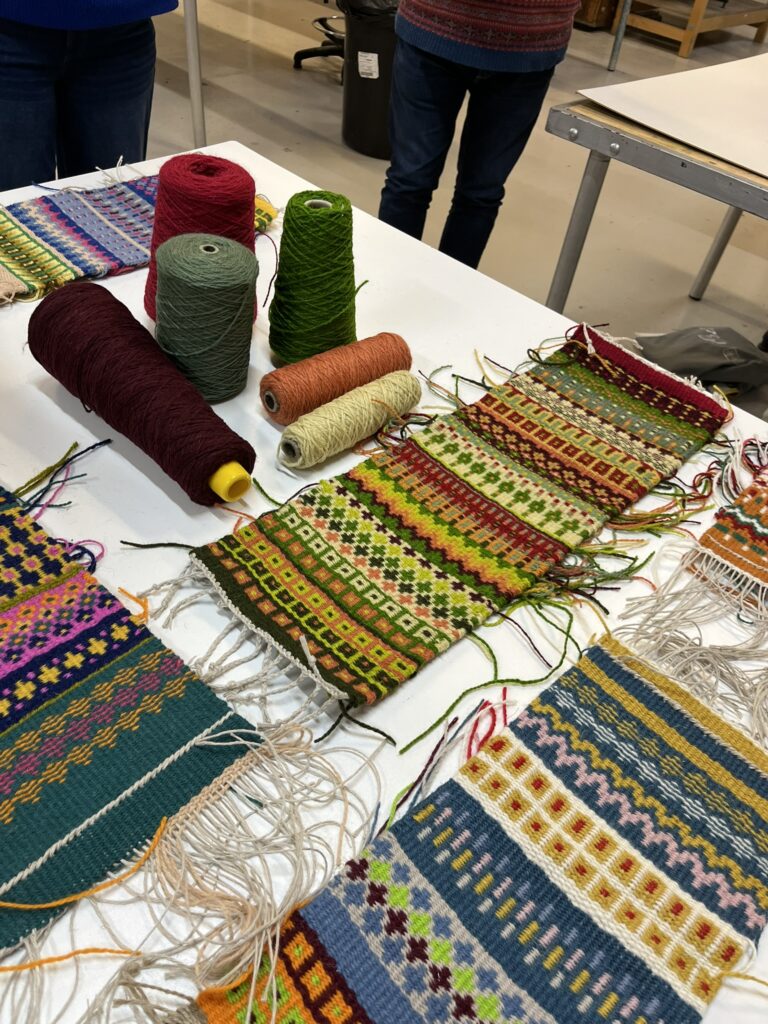
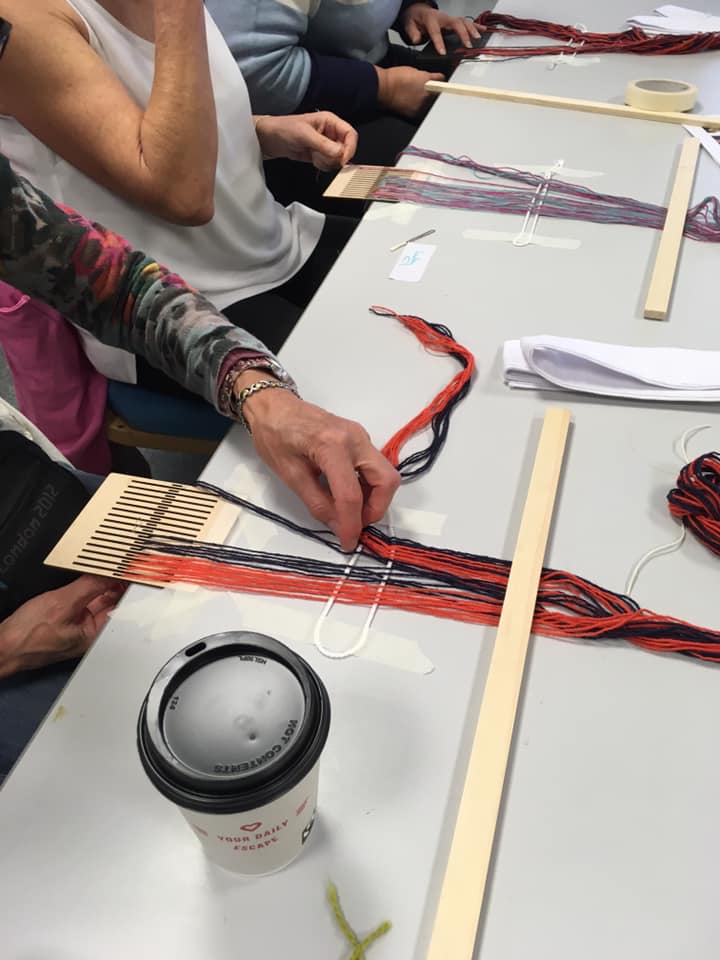
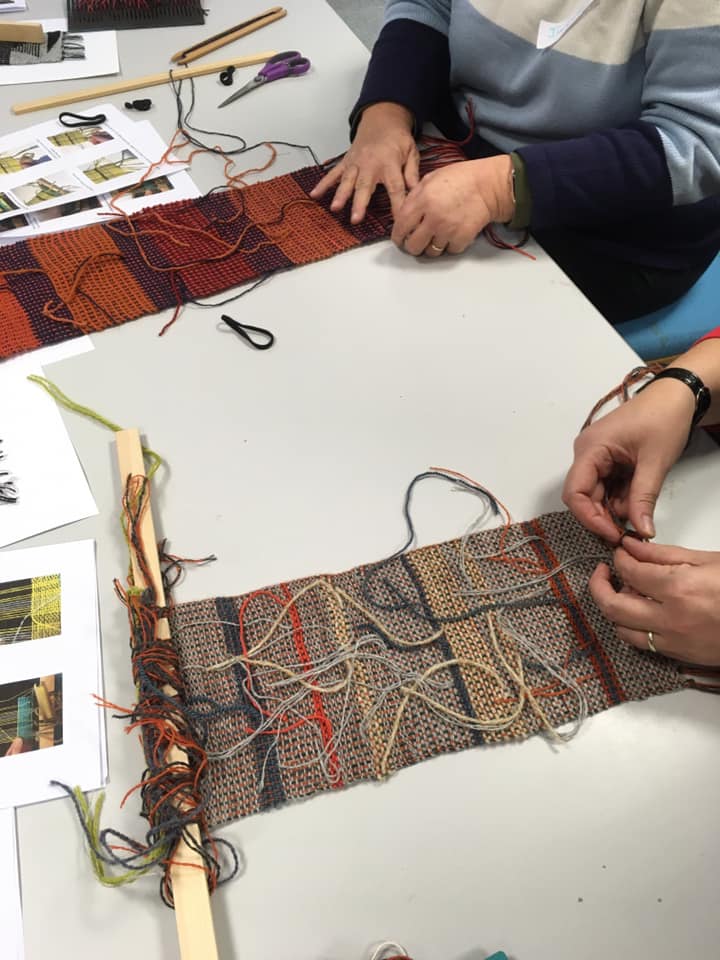
An example of students weaving krokbragd on the loom during the course.
Examples of students weaving krokbragd

More than a Short Course Weaving Krokbragd

However, the course, whilst integral, wasn’t the only positive experience. Friendships blossomed and weaving knowledge and life experiences were shared in class and over mealtimes. There was a beneficial sense that everyone was experiencing life at a different pace to ‘normal’.

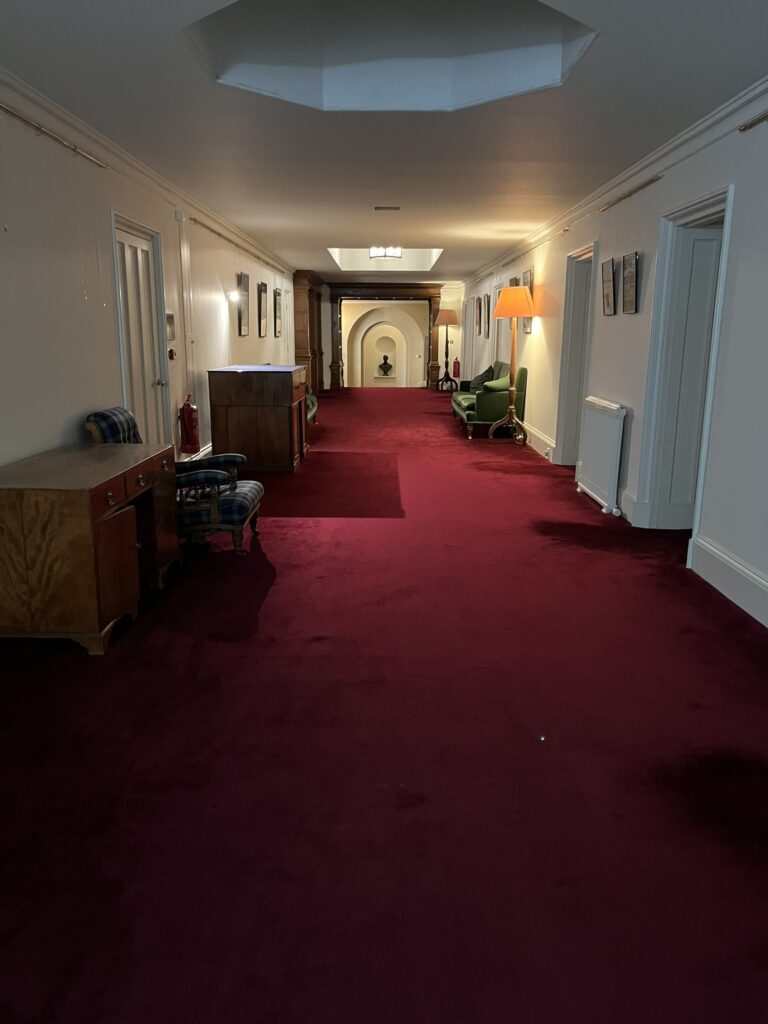
Personally, abandoning meal prep. for a family of five is a great reason to work away from home. (Though I did leave then fridge fully stocked!) But the ultimate unexpected treat was simply hanging around the opulent hallways and gardens during the breaks in the day. I was overdue a change in scenery it turns out.
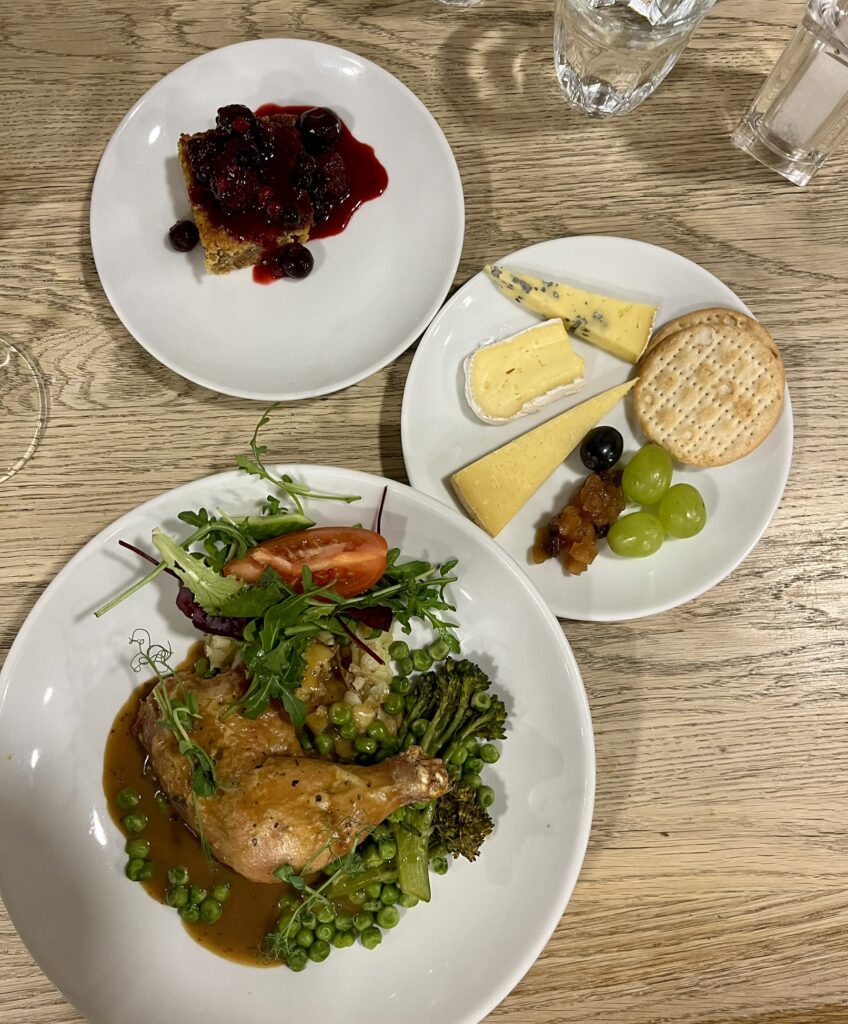
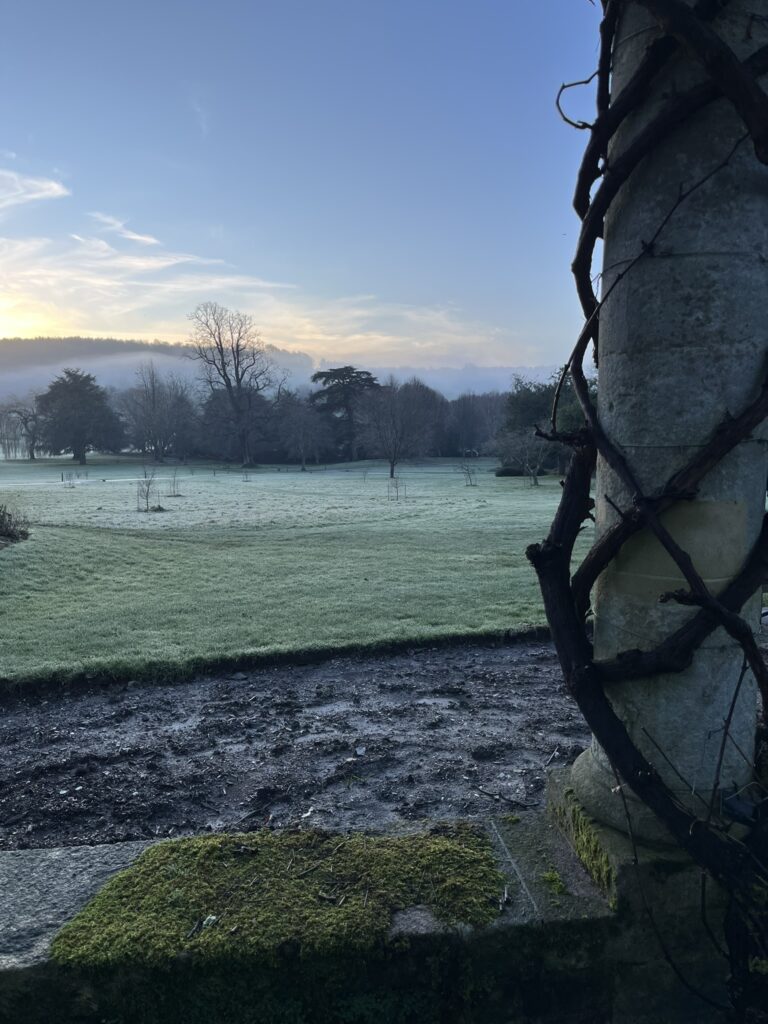
Zero meal planning, prep or clearing up. Bliss
Stunning views of the estate on my breaktime walks
Beautiful discoveries around every corner.

Making Myself at Home

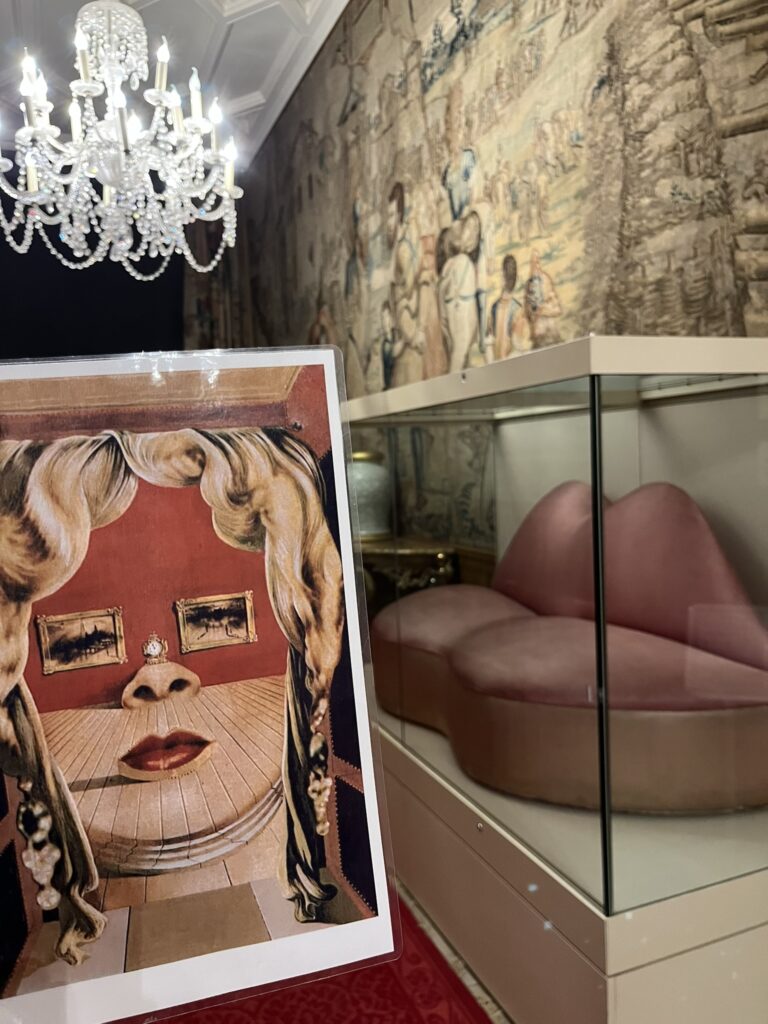
Before dinner on our penultimate day I sat with my laptop on the tapestry walled landing, and caught up on admin. feeling quite at home. I was at home! Being surrounded by textile and surrealist art is dreamy.

I discovered that the tapestries which adorned the walls were too tall for the hallway when they were installed. Instead of being cut down to fit the room height, the ceilings were instead raised. How refreshing is that for a textile art fan, (and triggering for project managers, accountants and builders!).
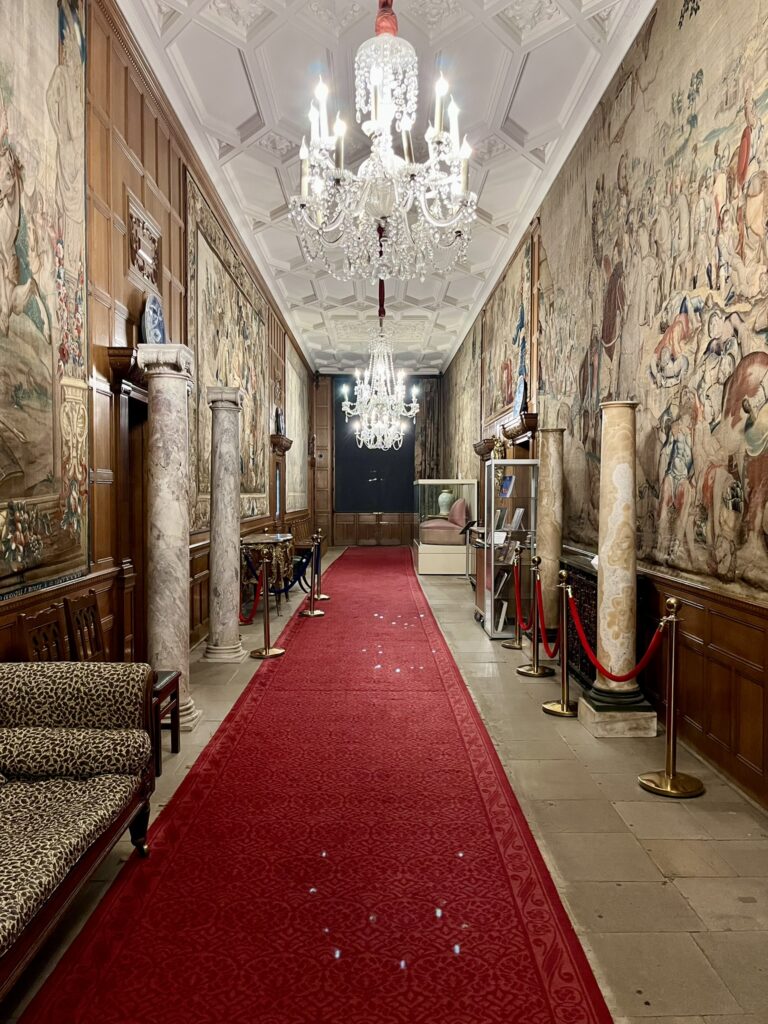
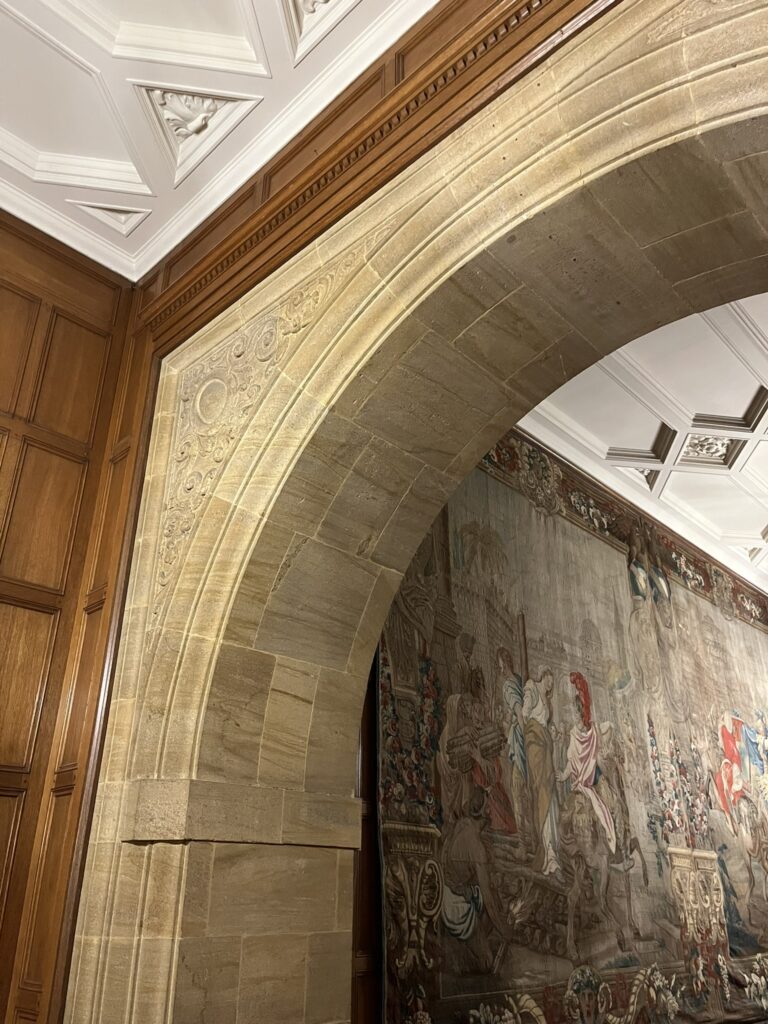
Feeling at home after spending a lot of time in this very spot.
Can you see where the ceiling was raised to fit the tapestries?
The next floor up took a hit on the ceiling height!

History

Before the course my research about West Dean was minimal. I basically knew that the college had originally been set up and funded by aristocrat Edward James. I grew curious to know more and fell down a rabbit hole into a world that’s far removed from mine. Plus, the rumours! Oh my word!. Here’s some official information from the website:

Originally a family home, West Dean was transformed into a centre for education and creativity by visionary patron of the arts, Edward James in 1971. With access to West Dean’s extensive archives and collections, including rare books, historic objects, and works of art. These resources, combined with the surrealist gardens and historic buildings, creates an inspiring environment for learning and discovery. 
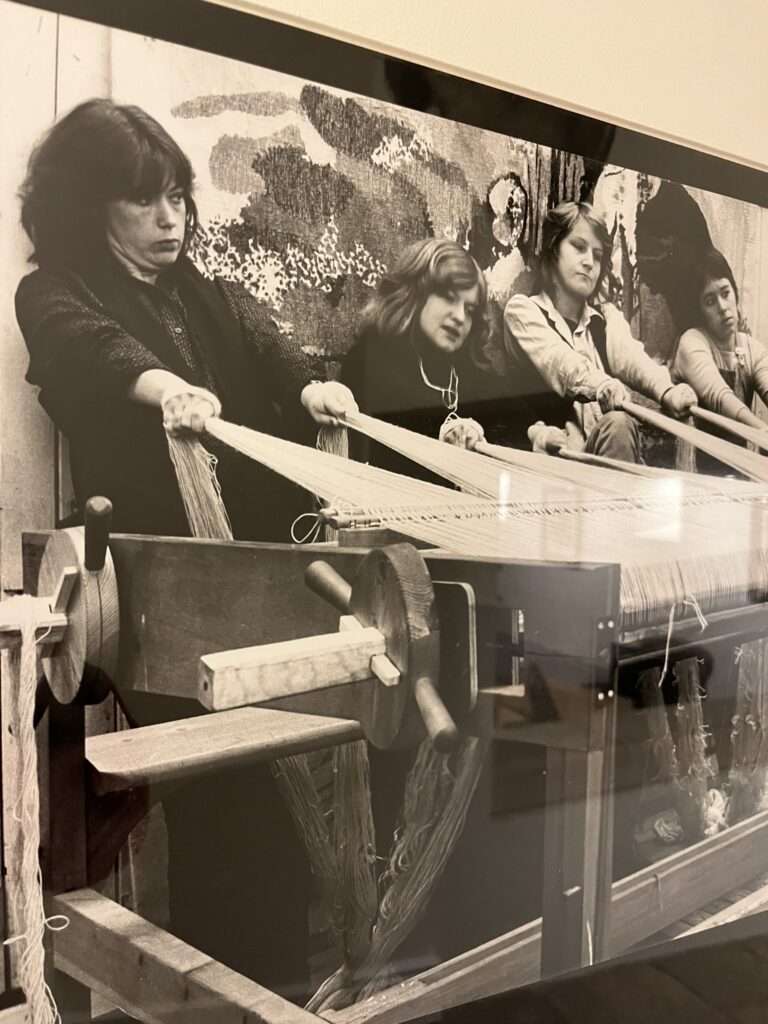
West Dean Tapestry Studio has been working with artists and designers to create bespoke tapestries since 1976

Edward James (1907-1984)

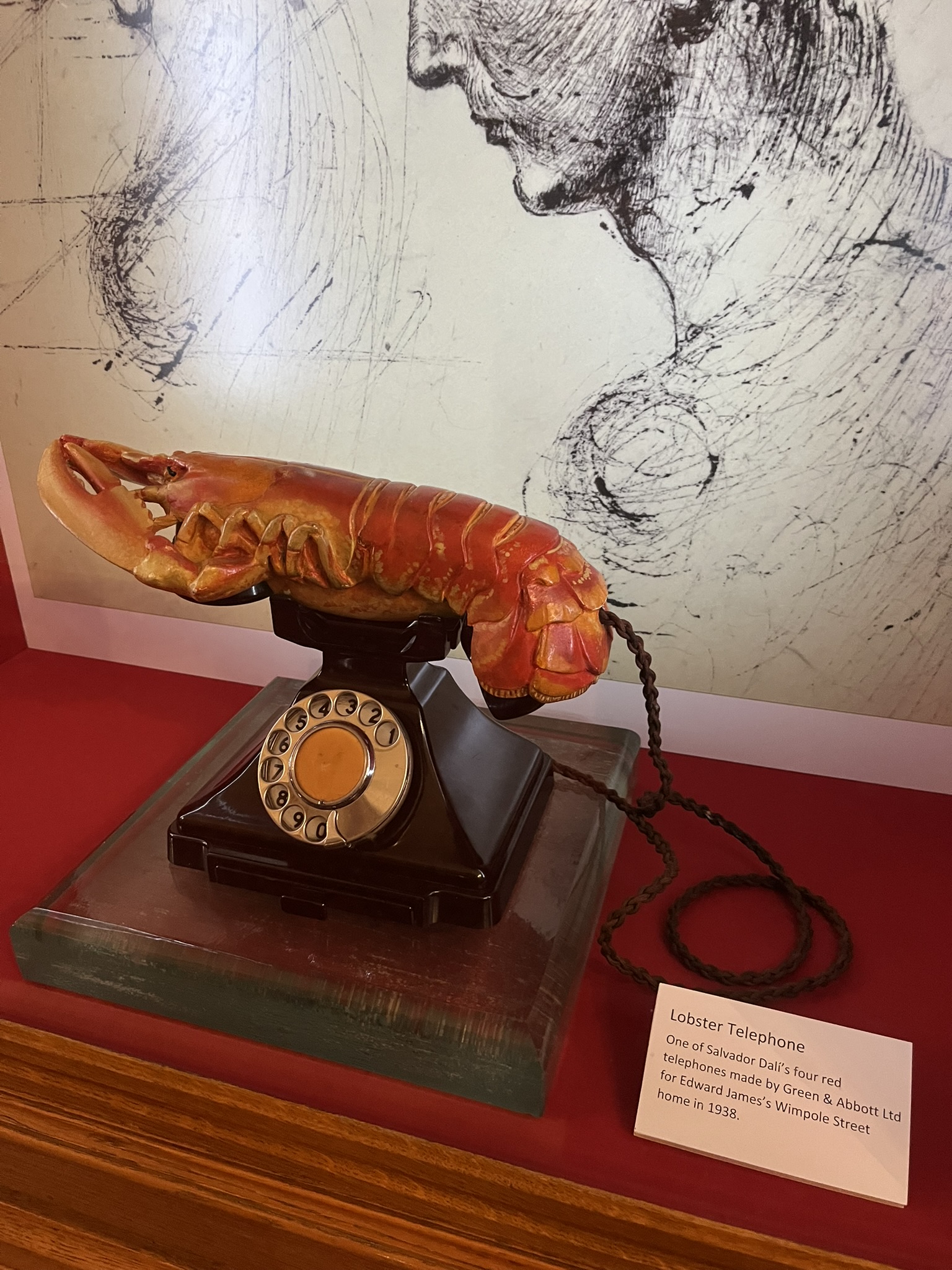
Edward James thought of himself primarily as a poet yet his innovations in art, design and architecture mark him out as an unrecognised visionary of the twentieth century. Through his patronage and creative partnerships with prominent Surrealists such as Salvador Dalí and René Magritte, as well as his support of artists including Pavel Tchelitchew and Leonora Carrington, James was involved in the creation of some of the most enduring representations of the avant-garde, including the iconic Mae West Lips Sofa and Lobster Telephone.

Lobster Telephone (also known as Aphrodisiac Telephone) is a Surrealist object, created by Salvador Dalí in 1936 for the English poet Edward James (1907–1984)
The Mae West Lips Sofa is an iconic 1938 Surrealist piece designed by Salvador Dalí for his patron Edward James, inspired by the actress’s lips and created at Monkton House on the West Dean estate in Sussex. (Link at the end of this blog post with more about this piece).

James sought to escape the conventions of his Edwardian upbringing, using his inherited wealth to sponsor artistic expression and to explore the limits of the imagination. His circle of associates indicated a lifestyle as fantastical as the works of art he acquired. In his pursuit of beauty, James meticulously designed every aspect of his world, often seeking to bridge the gap between dream and reality.

Monkton House

This desire to turn the everyday into the marvelous saw James transform Monkton House – a Lutyens-designed hunting lodge built for his family on the West Dean Estate – into a surrealist extravaganza. During the mid-1930s James completely transformed the property both inside and out, commissioning carpets, wallpaper, bespoke furniture and unique fittings. This idiosyncratic retreat, which James used as his main residence when in the UK, was considered to be one of the most remarkable examples of environmental surrealism in the world.
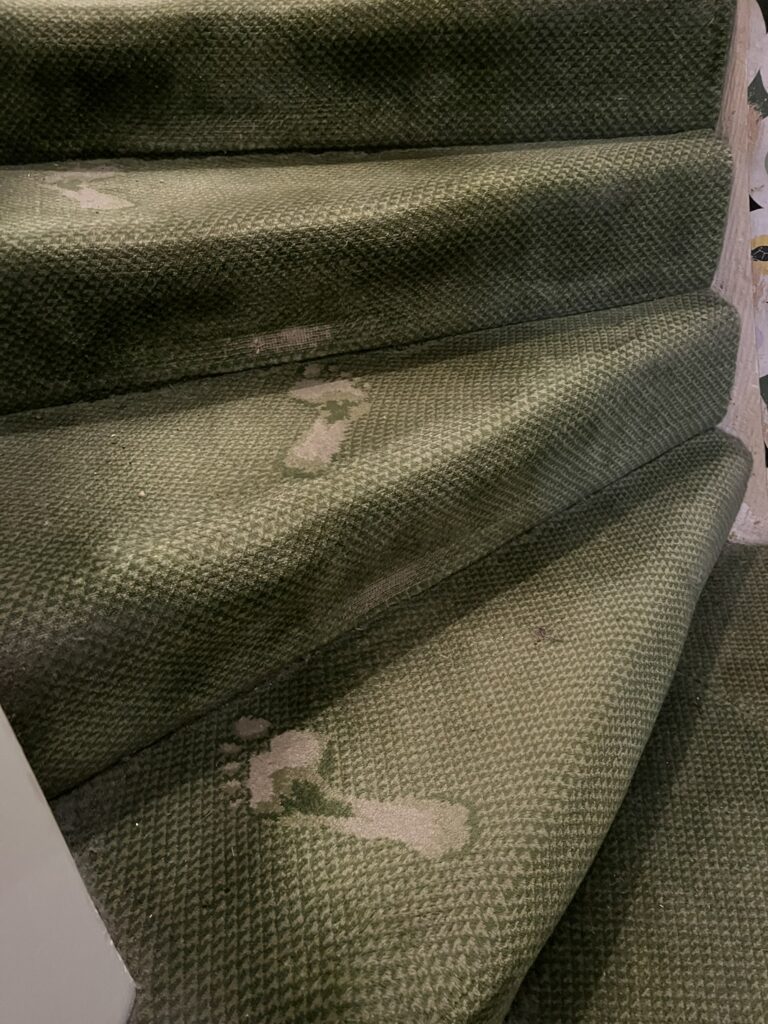
The Tilly Losch Footprint Carpet, moved from it’s original setting in Monkton House after James and Losch divorced , to West Dean college

I’ve included these extracts from the West Dean website here, because they help to provide an insight into the unconventional world of James. It’s hard for me to articulate quite what it is that makes West Dean so different from other educational settings I worked in. Though I believe it’s the romance of this fantastical, dream led existence.

Funding

I also became fascinated by James’ decision to fund a college for conservation and the Arts. The logistics and politics of this are of interest to me. On a much smaller scale I am in possession of the late Peter Collingwoods’ collection of looms and library of books on weaving. I’m currently working out a plan to ensure that this collection stays together in the future. Not being an aristocrat, I don’t have the option to sell of my art collection or additional homes as a means of funding, but luckily there are other ways.

James himself had concerns about his legacy as recorded by Christopher Turner in his feature for Apollo Magazine in 2021.  

“I didn’t give away my inheritance so that a middle-class couple, bored of watching television, could spend a weekend learning to make corn dollies for less than it would cost them to stay at a hotel in Torquay”.

The irony of this is I’m certain that a portion of the funding to sustain the college today comes from the the pockets of the middle class craft enthusiast. Those who have the means to sign up for a niche craft course such as mine. Importantly, these private bookings help to ensure that the college can still offer arts scholarships & bursaries. Many wouldn’t be able to access courses without them. As a tutor I feel happy in my role to support this.

Changing Gear

It’s normal for me to be slightly distanced from the rest of the world when I’m away from home teaching. However, i did feel as though I was living in a different time when I was at West Dean. It was such a refreshing change after the winter and it got under my skin. One month later, as I write this, I realise that this change in gear was needed. It was good to step back and assess the lay of the land as I work towards incorporating the Collingwood acquisitions into my studio life. I still have heaps of research to do, but I’m glad to have some clarity about my next step.

I’m also glad that I pursued this teaching opportunity as it’s been a while since I put myself in the path of an unexpected outcome. It’s a reminder to always keep an open mind. Simply placing yourself in a different environment will generally feed the soul. Quite a fitting way to sustain a creative business.
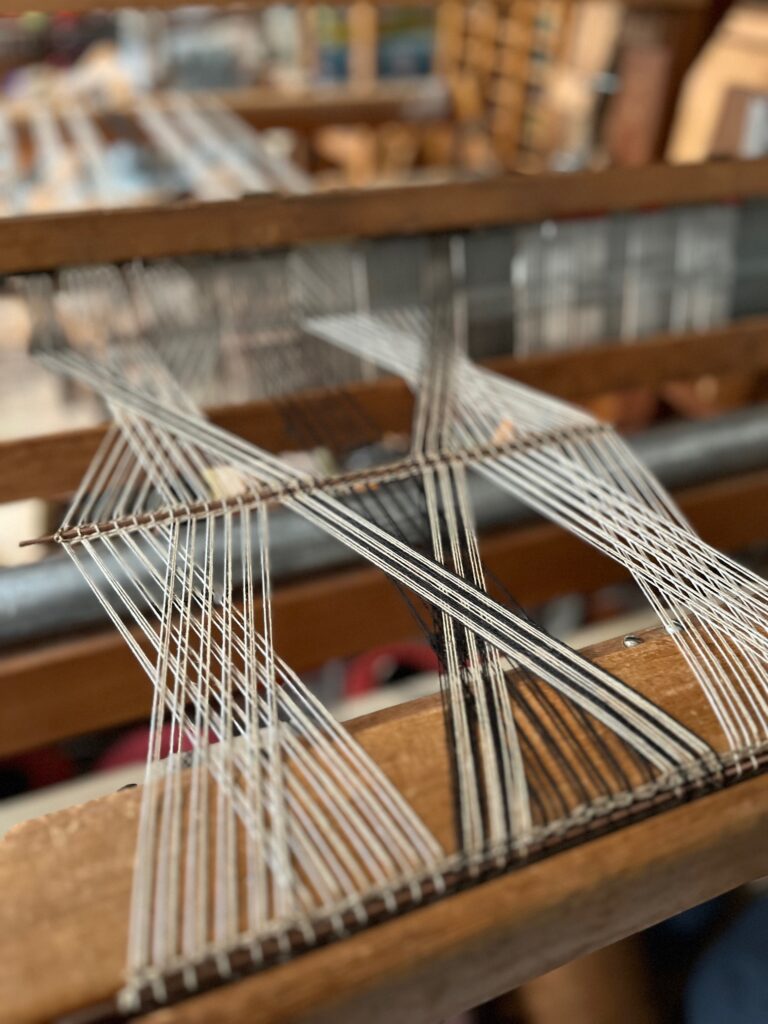
Weaving Peter and Jason Collingwoods looms into my business plan is quite a mission.

How This Came About

Finally, for anyone reading who might like to teach at West Dean, it might be useful to share how this opportunity came about. I owe a lot to Patricia van den Akker from The Design Trust. It was during her Firestarter event in March 2025 that I met Rosemary Marley. Rosemary was the short course manager for West Dean before she stepped away from the role at the end of last year. The serendipitous meeting reminded me that a teaching post at the college had once been on my business bucket list, long before I had an appropriate workshop model. Rosemary and I continued our conversation via email. When it was decided that I was a good fit we set about arranging the dates and marketing the weaving krokbragd class.

The initial vision for West Dean college was to preserve specialist craft training in conservation and offer student bursaries. In order to continue to offer this, short courses like mine help the college to meet it’s targets. And in return, I get to share my passion and knowledge about weaving krokbragd with wonderful students. As well as my tutor fee’s and new found connections, I got a bonus mini-break and an unexpected wealth of inspiration for the re-shaping my business in the future…

Here are links to the rabbit hole I referred to earlier on:

https://en.wikipedia.org/wiki/Monkton_House,_West_Dean

https://www.theguardian.com/artanddesign/2021/oct/17/how-dalis-lips-sofa-began-life-on-the-back-of-an-envelope

https://apollo-magazine.com/edward-james-surrealism-patron-salvador-dali/ (behind a paywall)

https://www.selvedge.org/blogs/selvedge/artist-rugs-carpets-the-edward-james-footprint-and-pawprint-carpets-1930s?srsltid=AfmBOopzYe9g-Xunu6nmGjq6JtE0fxMxl2-DZ7IVS4VI_QmUzwqVL2pS (behind a paywall)
Becoming an author

KROKBRAGD Contemporary Weaver With Colour by Angie Parker

On January 28th 2025, I officially became the published author of KROKBRAGD – CONTEMPORARY WEAVING WITH COLOUR. A niche book about weaving this Scandinavian boundweave technique.

I am writing this, on 10 February – the first real opportunity to let it sink in.

Image of the new krokbragd book by angie parker
KROKBRAGD – CONTEMPORARY WEAVING WITH COLOUR

Any romantic childhood notions of what ‘being an author’ might entail were instantly bulldozed by a fabulously real and rather frantic few days. Whilst I might once have imaged the writers’ life to be sipping on Kir Royales, nibbling canapes, wearing marabou kitten heel slippers and a silk dressing gown, in a Barbara Cartland fashion, I did in fact spend 17 hours a day packing and carting books to the DPD drop-off at the corner shop.

On the day my book was released I got a congratulatory email from The Crowood Press, my publishers inquiring if I’d be celebrating the occasion with a glass of something fizzy (they were all for the romantic version too, it seems).

No, publishers, I didn’t do that on release day. Not because I don’t think it’s worth celebrating; I do. But because I was delighted to have pre-sold almost 250 before the publication date. With new orders coming in by the hour, over 250 copies needed to be packed and posted to the eager recipients who had been patiently waiting. Ideally, before I then had to teach a two-day weaving workshop at the weekend. This was way beyond the ‘best case scenario’ I’d dared to image.

A pallet with 300 books arrives in BS3 and it didn’t rain.
My books…and a race against the clock to get them posted to their owners.

I’d estimated that it would take 5 minutes to process and print the labels and to pack each parcel. Approximately 20 hours of work. I misjudged that massively….(or rather, I forgot to include breaks and interruptions).

I am still worshiping the printer for rising to this impressive challenge.

There are around 34 steps to process each order, including filling in customs forms and the new country-specific GPSR labels, though luckily my teen-elves got on board with the packaging when they weren’t in school. There is also a lot of cross-checking order details to help to prevent any mistakes and I must have seen the name of everyone who ordered a dozen times during the process. Each name feels like a familiar old friend (which some are, admittedly!).

And thank you elves who know exactly what to do whenever I fill the table with signed copies.

To keep my feet on the ground during this rather busy few days, my wing man/husband had just had hernia surgery and was on total bed rest (I was the worst nurse ever), the builders continued to work on the new home extension, the seam textile collective were on the final week of our Crowdfunder, and the eldest Parkerette had a driving theory test which somehow managed to involve a three-hour round trip in the middle of my busiest work day. (They passed).

Despite the everyday hurdles, I did manage to post 85% of the pre-orders within 36 hours, and 100% in less than 3 days. I can’t remember the last time I felt so tired, and I will be eternally grateful to our domestic printer for not playing up and rising to the challenge of approximately 700 print-outs!

One of six drop off’s over 3 days, and I’ve not been banned from any corner shops…yet.

So what is the book that has been winging its way around the country and globe all about?

It’s a detailed exploration of KROKBRAGD, the traditional Scandinavian weaving technique which I’ve been obsessed with for over 30 years and which has been at the heart of my weaving business.

In the book I share everything I know on the subject with over 400 photographs and numerous patterns and examples for inspiration.

One advantage of life and work being particularly busy is that I didn’t have a second to dwell on the jitters that go hand in hand with launching such a book into the world. By the time I had a moment to catch my breath, the feedback from recipients had started to filter through, and thankfully they were reassuring.

Here’s what readers are saying:

“I just received your beautiful book.
What a pleasure to initially skim through it and see all the photos and detail.
This book is so much more than I expected. 
There was obviously a lot of hard work to produce this and I thank you for that.
I’m sure I will be using this book enormously to guide me through my rug weaving.”

Janet, Santa Fe

“Mine arrived today – so lovely!
A wonderful mix of technical instructions and inspirational photos.”

Clare, UK

“Your book is spectacular Angie. It was a late Xmas present from my wonderful OH, as requested! The photographs of your brilliant weavings are truly inspiring, and to share your knowledge and tips with us is a very honorable step in helping us to improve our weaving skills on Krokbragd and rug making. So thank you!”

Sandy, UK

“Your beautiful book arrived today. It’s really gorgeous and full of so much wonderful information. The images and colour are stunning.”

Adah, USA

“Got my copy today. This book is a wonderful work of art itself, before I’ve even sat at my loom to try my first krokbragd weave! Congratulations on this beauty. I’ve been waiting for this kind of book for a long time.”

Gillian, UK

In all the busy-ness of life and work I’ve yet to formulate a slick marketing plan or launch party for the book, but I’m ready to start now that it is out in the world. An exhibition is booked at MAKE SW in August-Sept but the online course, workshops and book promo/demonstrations are still very much in the planning stages and making their way to the top of my list of things to do.

All the new workshop dates will be shared to my newsletter subscribers, so make sure you’re signed up to be the first to hear.

For now though, i think it really is time to drink something fizzy, and maybe weave some contemporary krokbragd… Know any books about this?

And yes…I did finally get to raise a glass to all the lovely people who’ve bought a copy of my book. THANK YOU!

KROKBRAGD – Contemporary Weaving With Colour is available now from all UK booksellers and signed copies from www.angieparkertextiles.com

NEW BOOK-AVAILABLE NOW

KROKBRAGD Contemporary Weaver With Colour by Angie Parker

KROKBRAGD – CONTEMPORARY WEAVING WITH COLOUR. Order here.

How can you tell when a non-writer is writing a book? Take a look in their kitchen cupboards. (They’re likely to be suspiciously tidy!)
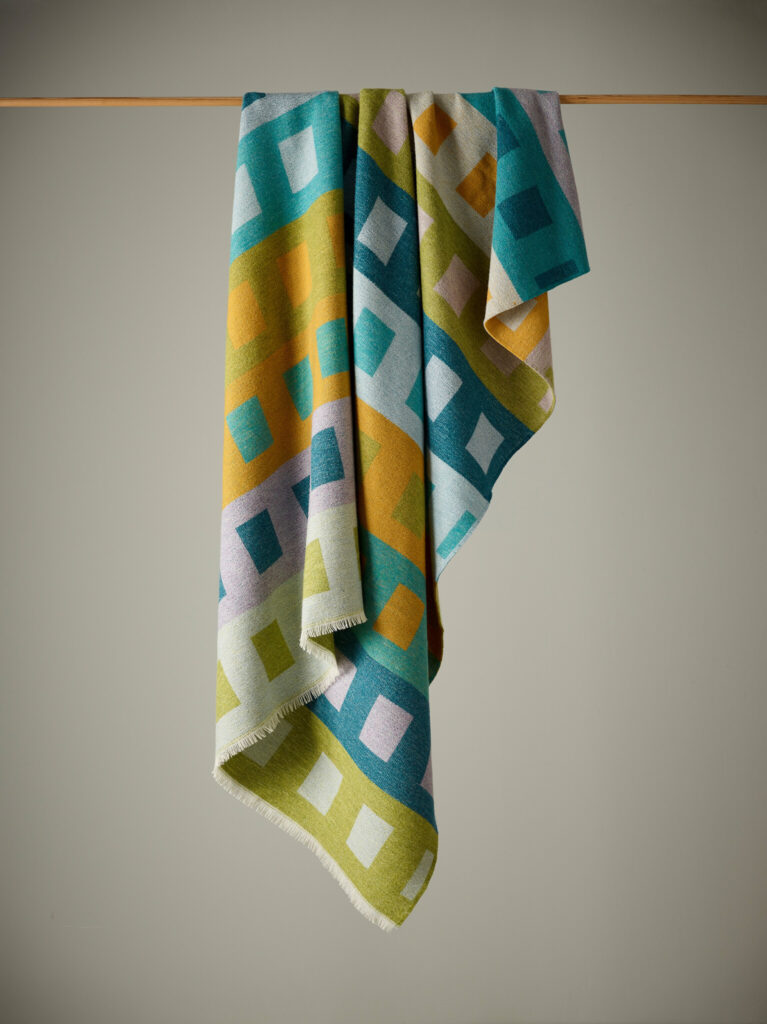
As part of a 2014 business training program by The Crafts Council, I was asked to write a list of career aspirational goals beyond my wildest dreams. Writing a book about krokbragd was not on that list!

However, ten years later…

Like most non-authors, writing a book on the topic I’ve been passionate about for over 30 years was something that sat in the periphery of my consciousness, alongside things like running a marathon, mastering the piano, and sustaining a crop of tomatoes. Challenging and fulfilling things things that I most likely won’t get around to in this lifetime.

But when I was asked by The Crowood Press publishers at the beginning of 2022 if I would write a book for them, the flattery overcame any resistance and I agreed to deliver 50,000 words and images by February 2024. This would give me two years from the start of the conversations. Ages! I’ll have it done in eighteen months…easily!

It turns out that I’m with Douglas Adams when it comes to deadline, as he famously retorted,

“I love deadlines. I love the whooshing noise they make as they go by”.

Yes, the plan of suggesting a long lead time with the intention of delivering early was the sort of line that could win a prize at the Edinburgh Fringe Festival for it’s ‘laugh out loud’ sheer idiocy. How a woman in her fifth decade still hasn’t accepted that tasks will always grow to meet the deadline is the second most surprising thing about this book. The first, is that it did in fact get finished as is now available to order through my website. Yes, I actually did it!

Image of the new krokbragd book by angie parker
KROKBRAGD – CONTEMPORARY WEAVING WITH COLOUR. Actually existing beyond the million files in my long suffering and now unrepairable laptop.

Writing the book was an interesting experience and I enjoyed most of it. I took some advice from writer friends and focused on small chucks and tried to be disciplined. (Well, apart from a bit of Tupperware sorting on occasion). The book itself follows a popular formula covering history, equipment, materials, technical skills, inspiration, planning design, colour, rugs, applications and projects. Actually finishing the book and getting it in the right shape to deliver to the designer, however, was a whole different skill-set and not one that was suited to my ad-hoc methods of working. But; I persevered, asked for help when I got stuck, and eventually the final red line went through the last item on the seemingly never-ending to-do list. The sense of relief overshadowing any feeling of achievement in that moment.

In between the lines (and the 400+ photographs) I now see the incredible talent of the designers and editor who created a beautiful layout from the huge number of files I sent to the publishers inboxes. I see the generosity of the books contributors and supporters, the teachers who passed on their weaving skills and the friends, family and colleagues who encouraged and supported me along the way. The acknowledgements on the back page was by far the easiest part of the book to write and I could probably have written another 50,000 words on that. (And yes, I’m sorry for everyone that I missed out!)

So, here it is. A hardback book about contemporary krokbragd weaving, with my name and designs on the cover. It’s quite surreal and I’ve a new level of respect and admiration for anyone who has ever written a book before, and I’m in complete awe of those who do it for a living.

KROKBRAGD – CONTEMPORARY WEAVING WITH COLOUR has been on sale to pre-order from November 2024 and is now available for next day dispactch from my online shop. All the details are here.

And for those who ask if it’s something I’d do again? I think I have some weaving to be getting on with for now…

Ethel Mairet-The mother of English handweaving

New Exhibition

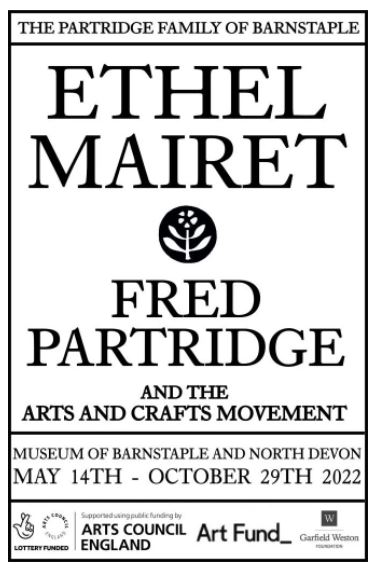
Exhibition at the Museum of Barnstaple and North Devon. May 14, 2022   –   Oct 29, 2022

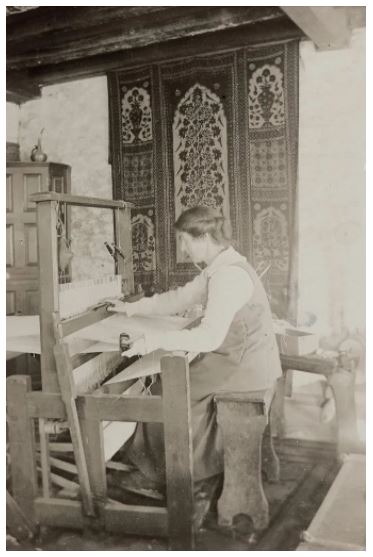
The mother of English handweaving. This is how Ethel Mairet (1872 – 1952) was described by esteemed Japanese master potter Shoji Hamada. She was a highly skilled weaver and pioneer of Britain’s twentieth-century modern craft revival. She was also the first woman Royal Designer for Industry (RDI) in 1939.

Credit: From the Papers of Ethel Mairet, Crafts Study Centre, University for the Creative

Schools workshop

I was thrilled when I was approached to lead the school’s weave and natural dyeing workshops for Barnstaple Museums’ new exhibition on Mairet and the Arts and Crafts Movement, and I’ve found researching her life’s work fascinating.

From the onset, I felt a close affinity with Mairet. She was born exactly 100 years before me, spent time living and traveling in India, (as I did in 2006), prioritised colour and combining different textures of yarn in her weaving more than the techniques, (whilst being highly skilled technically), and she taught and influenced Peter Collingwood*, (who’s workshop contents I have recently acquired). The more I discover, the more I want to know and we share a similar approach in our weaving and teaching.

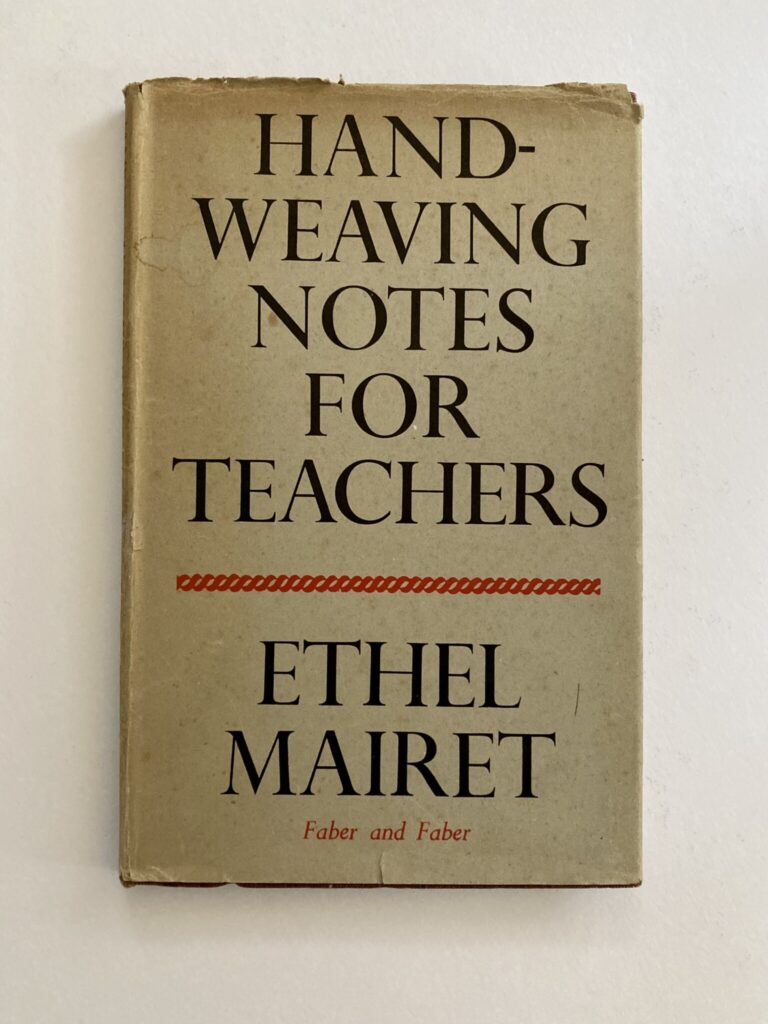
A copy of her rare book, Hand-Weaving Notes For Teachers, serendipitously came into my life when the conversations with the museum first started. This has been instrumental in how I’ve designed the school’s workshops as well as giving me insight into her mindset.

A series of books and weaving and dyeing form part of Ethel Mairets legacy

Importance of weaving in schools

In this book, she doesn’t hold back on the impact of the industrial revolution on handweaving and the value of promoting it in schools. Whilst she recognised the economic importance of power looms, she was rightly concerned that without the understanding of materials and design that come through handweaving, the textile industry was taking risks with quality and creating less desirable cloth. These concerns are just as valid 100 years on, as we address mass production, over-consumption, fast fashion, and the impact of this on the climate. In support of this viewpoint, I actively promote the ideology of fewer, better things in my own practice and teaching.

She highlighted the ways in which studying dyeing and weaving connect to other parts of the school curriculum, covering maths, chemistry, and history, as well as design.

This is also still relevant today, and it’s worth mentioning a few additions. I think craft, and particularly weaving is good for the well-being of our young people. The session focuses on the basic weave structures of plain weave and twill, with more emphasis on creating textures through the yarns we will naturally dye in the first workshop. By its very nature, the process will enable the students to be in the moment and find their own rhythm. A practice advocated by those working in the mental health sector. You can read more about the positive impact of craft on your mental health in the article from the Crafts Council https://www.craftscouncil.org.uk/stories/4-reasons-craft-good-your-mental-health

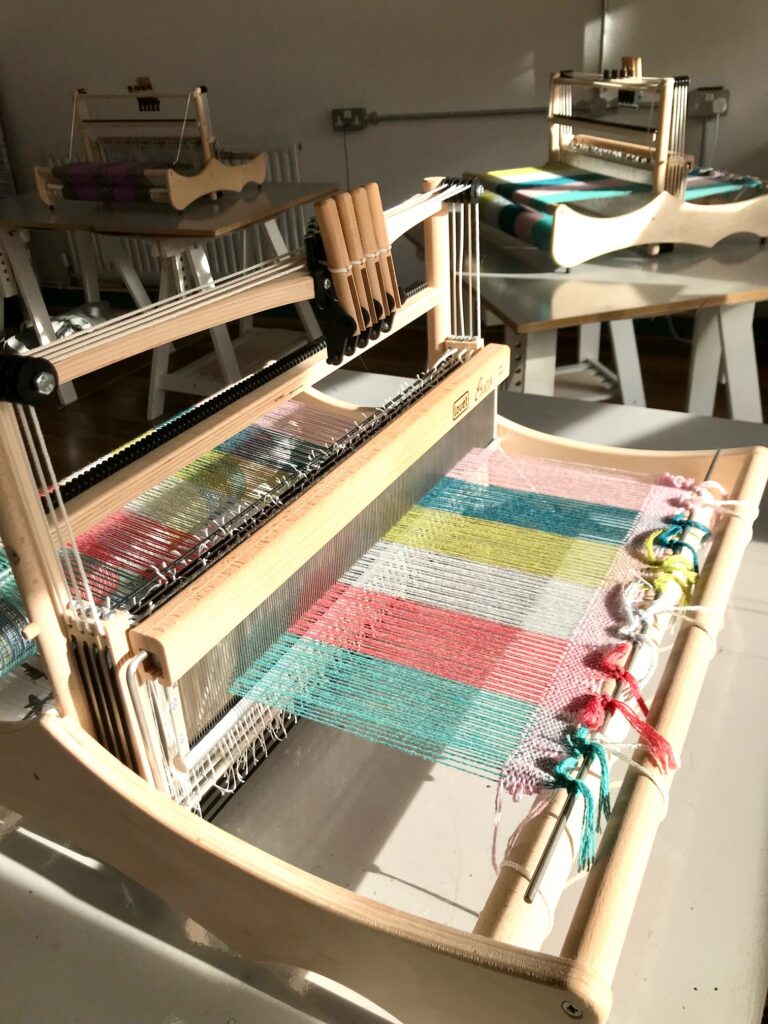
I will be using dressed 4 shaft table looms in the sessions, which will give the students an opportunity to gain a greater understanding of the principles of weaving without overwhelming them with the technicalities of warping up.

The Louet Erica 4 shaft table loom for schools weaving workshop

Sustainable making

Mairet was adamant that teaching in schools shouldn’t be about creating useless and unwanted things, and I entirely support this view. In response, I have created a workshop where the dyed yarns and woven cloth is made up into simple cushions which will be used to create a warm and comfortable space in a communal area. Ideally where the pastoral care team is based. I hope the students will feel a sense of pride in their creations and a better understanding of the value of handmade.

Huge thanks to expert dyer, Ria Burns for the crash course in dyeing with plants. Read Ria’s blog post on Ethel Mairet here.
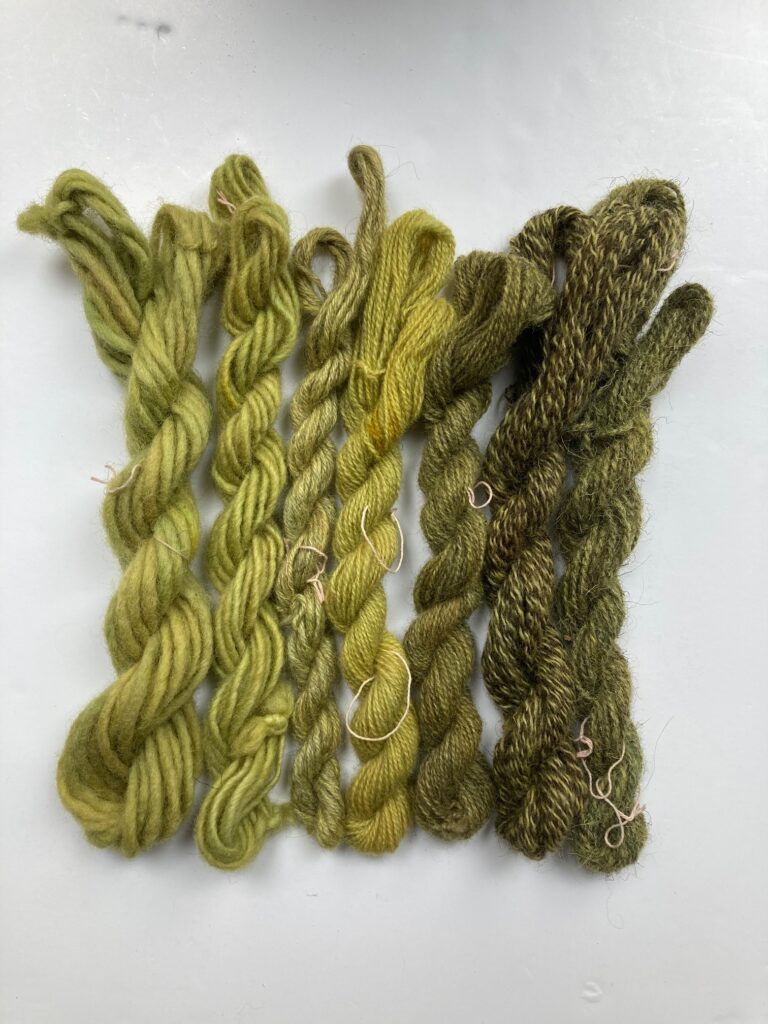
An example of the simple handwoven products the students will produce in the workshops

Indian connection

In her notes for teachers, Mairet emphasises the importance of schools having access to “a collection of good, interesting modern and traditional textiles from all over the world, both hand and machine woven as an inspiration for fine workmanship, to help with new ideas”, and to maintain standards of quality.

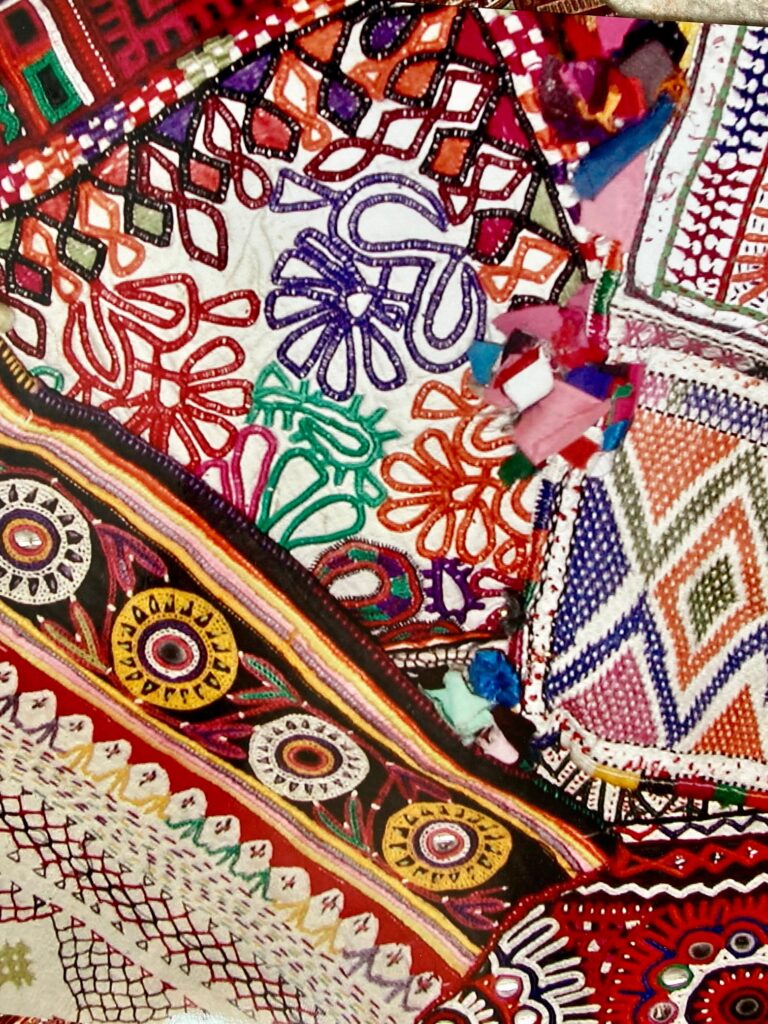
Like Mairet, I spent time living in India and will be able to draw on this experience in the classroom as well as having examples of textiles collected on my travels to share. (Admittedly these focus more on stitch than weave).

Design

I was pleased to discover that Mairet, like myself, preferred to design at the loom, and saw transferring the pattern to paper as the last part of designing, not the starting point. The paper designs are for reference only. I will encourage the students to simply play with colour and texture when incorporating their naturally dyed yarns into their weaving. I’ll bring along some other interesting yarns to encourage experimentation too.

As an aside, I was intrigued to see that Mairet regarded the teaching of Scandinavian patterns as a bad influence in schools, and in another of her books, she raises concerns that in trying the preserve traditional techniques the creative spirit is killed. She did recognise the instances of imaginative weavers fighting against this trend. Given that I’ve spent almost 30 years trying to exhaust the possibilities of Krokbragd, I would love to have been able to chat to her about this freedom to play with design when using these weft-faced weaving techniques, though I agree that it’s not an ideal starting point from which to learn about weaving in schools.

Example of creating contemporary textile designs using traditional Scandinavian weave techniques

Materials

Another thing I admire in her work is her receptiveness to the new synthetic materials that were coming onto the market such as rayon and cellophane and the considered way she introduced them into her weaving. I share this interest in using less conventional yarns such as glitter yarns and chenilles alongside wool and cotton in my rugs and woven panels, though I will be looking at sustainable fibre options in the future for obvious reasons.

Ethel Mairet handwoven sample using cellophane. Credit Tom Van Deijnen
Angie Parker handwoven Krokbragd sample. Cotton, chenille and glitter yarn

The more I learn about the significance of Ethel Mairet, the more I would love to have crossed paths with her in life. But given that she passed away 20 years before I arrived on planet earth I have to be thankful that she left behind a series of books, records, and samples. It must have been amazing to experiment in her workshop. Whilst she is regarded as the mother of English handweaving, I quite like the idea of being a mischievous granddaughter, and because of her, I’m delighted to have the chance to share my passion for weaving with the students from Park School.

This celebration of her life’s work and teaching at Barnstaple museum is a great opportunity for weave enthusiasts to learn more about her. The exhibition brings together items from the Museum’s own Partridge Geology Collection with loans from national and regional museums including examples of Ethel’s celebrated handmade textiles from the Crafts Study Centre and Ditchling Museum of Arts and Craft; jewelry created by Fred from the V&A,  Fitzwilliam and Birmingham Museums; and a first edition copy of a book on Mediaeval Sinhalese art from the British Library.

May 14, 2022   –   Oct 29, 2022

Book onto a backstrap weave workshop

As part of the exhibition, I will also be teaching backstrap loom weaving during the weekend of activities. Booking details here.

*In Peter Collingwoods Obituary in the Guardian Oct 25, 2008, Roger Hardwick writes:

On his return to Britain, (Peter) spent six months at Ditchling, East Sussex, in the workshop of Ethel Mairet, then the best-known weaver in Britain. He thought that she accepted him as a pupil because she was intrigued that a man wanted to weave.”

Thanks to Ria Burns and Tom of Holland. For further reading, I recommend Tom’s 2016 blog post on the Mairet collection at the Ditchling museum.

About the author

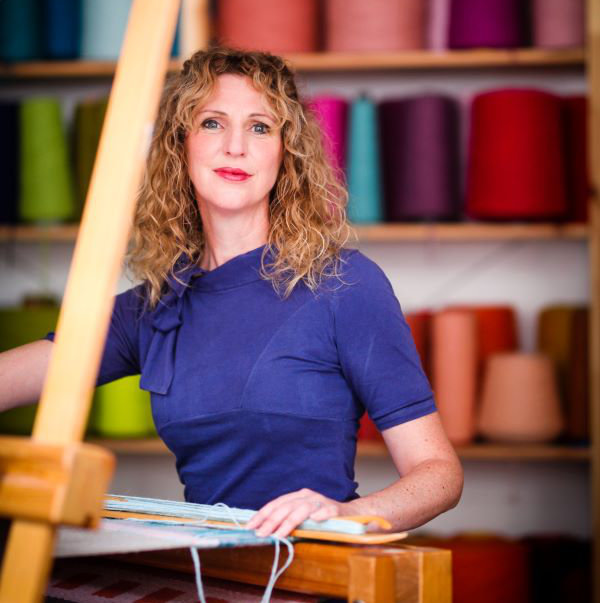
Angie Parker is a weaver, designer, and colourist. She trained in rug weaving in the 1990s and started her textile practice in 2014. She hand weaves rugs and art panels in her Bristol studio and some of her designs are produced in small batches through various partnerships. She also teaches when her schedule allows. She is currently buried underneath 2 tonnes of rug wool. Sign up to her newsletter here, for updates once she emerges.

Were blankets invented in Bristol?

bristol-blanket-summer-angieparkertextiles

Short answer. Quite possibly, yes!

Longer answer…

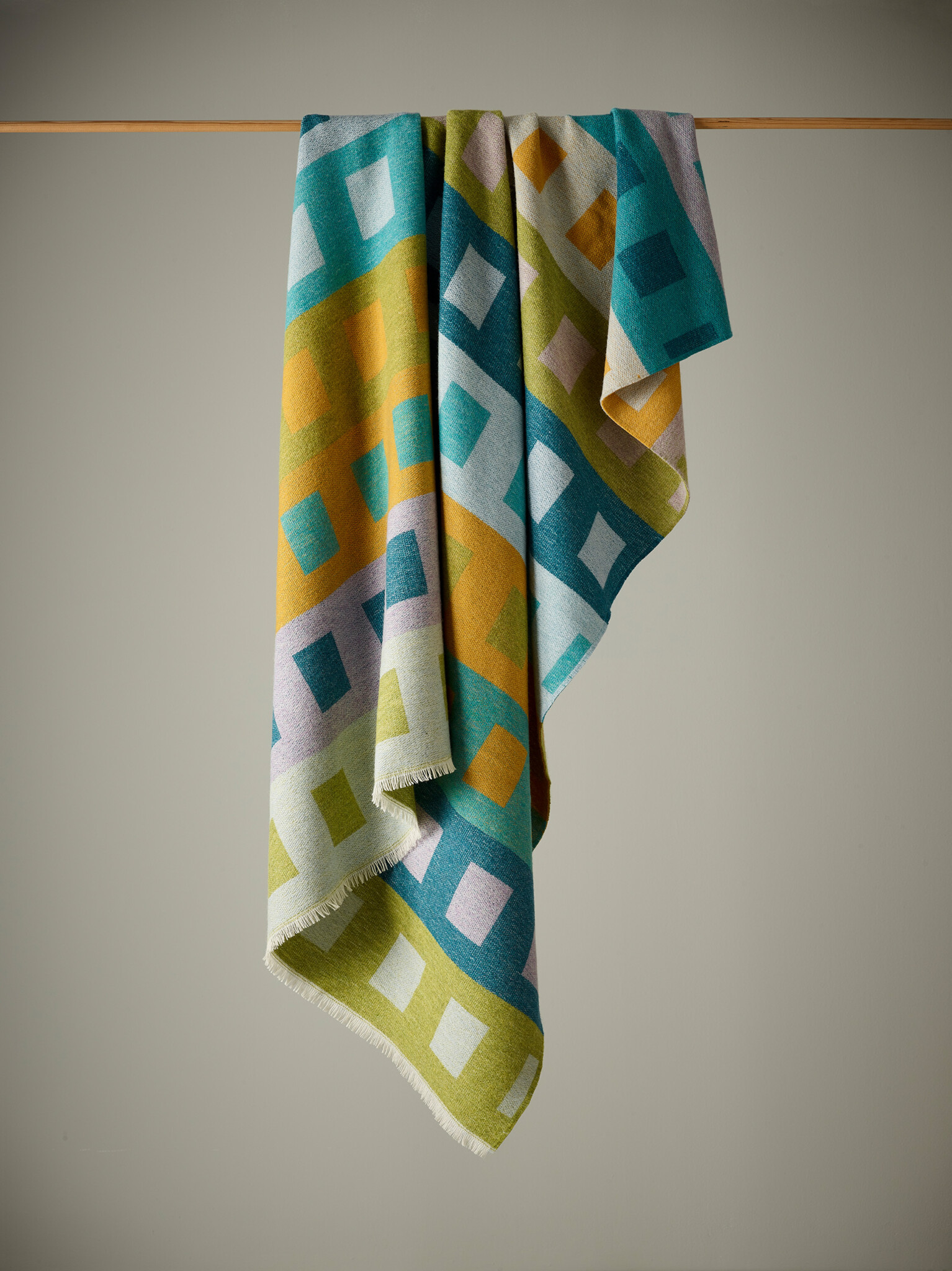
I came across the story of the 14th Century Flemish wool merchant, Thomas Blanket, inventing blankets when I designed The Bristol Blanket in 2020.

My colourful throw, inspired by the painted houses of Totterdown and Cliftonwood was woven by the team at Bristol Weaving Mill-A micro-mill in the heart of the city. It was very much a Bristol thing…

bristol-blanket-original-angieparkertextiles
The original Bristol Blanket 2020

I had created these blankets in response to the pandemic and it was local customers who brought my attention to Bristols’ link to the origin of blankets. But is there any truth in the rumour?

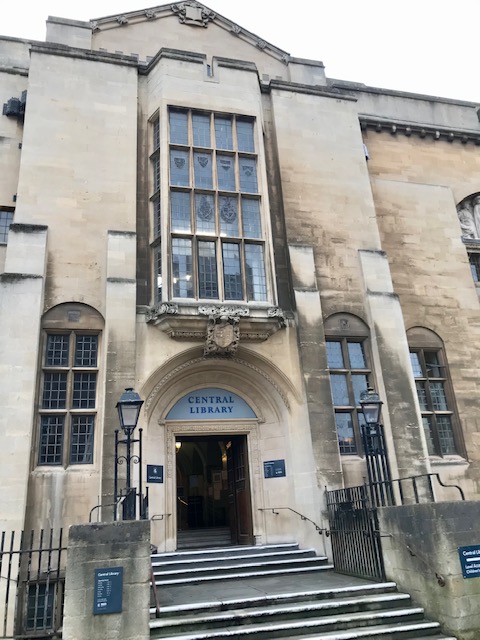
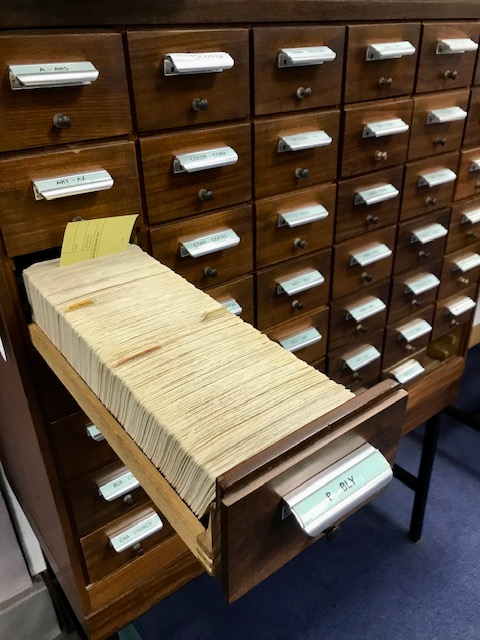
Channeling my inner Blomkvist and Salander from Stieg Larssons’ Dragon Tattoo series, I headed to Bristol Central Library archives to investigate.

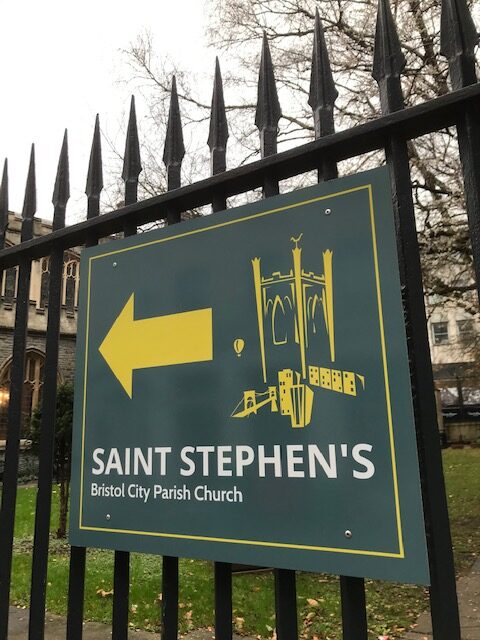
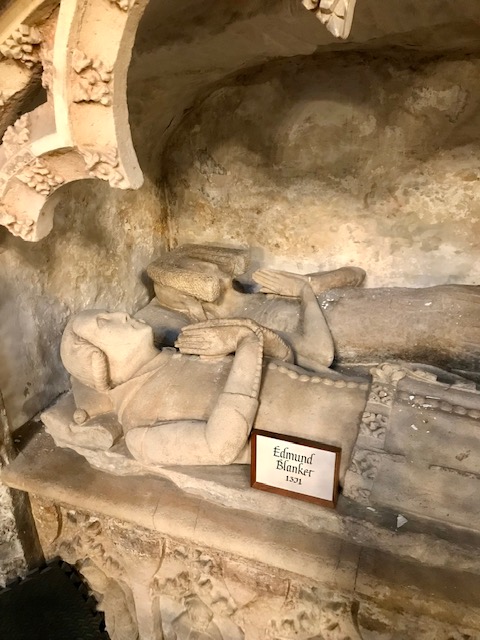
En route to the library, I nipped into St Stephens Church to take a closer look at the tomb of Edmund Blanket and his second wife, Margaret.

Bristol-Blanket_angieparkertextiles

Urban myth or historical fact?

The story goes that it was this Flemish merchant and wool manufacturer who invented Blankets, but the tomb gave up little information. There isn’t an inscription, but there is evidence to suggest that this is indeed the Blankets. This includes the clothes worn by the effigies and the modifications to the tomb tie in with the re-building of the church. The timeline fits. Next stop; Central Library…

Bristol-blanket-angieparkertextiles
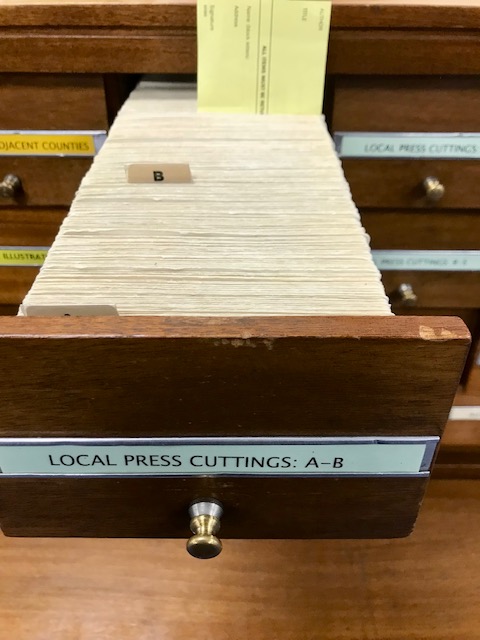
Bristol central library

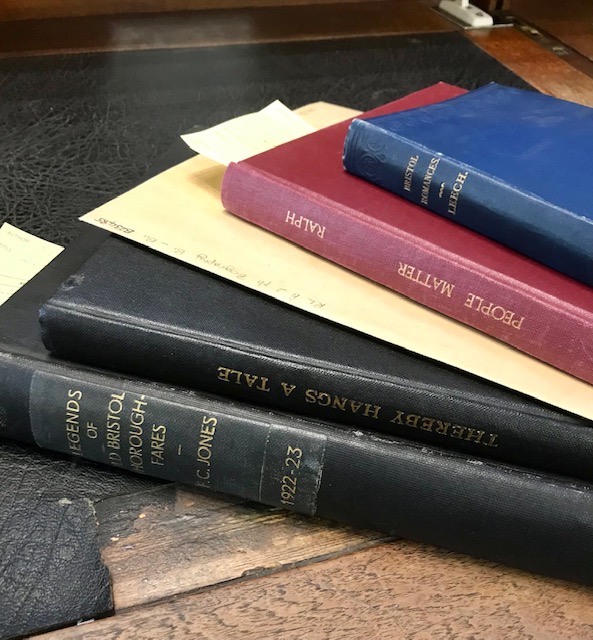
The information in the archives was much more revealing, and at this point, I need to give a shout-out to the librarians and archivists who helped with this task.

Bristol-blanket-angieparkertextiles
bristol-blanket-angieparkertextiles
bristol-blanket-angieparker-textiles
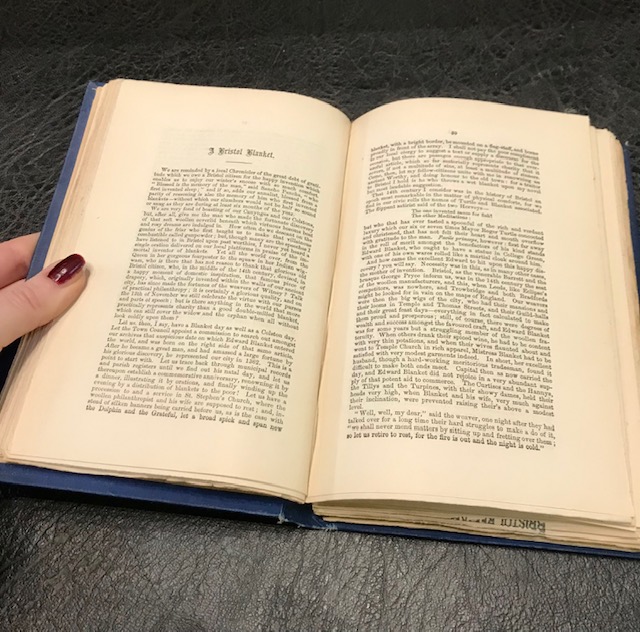
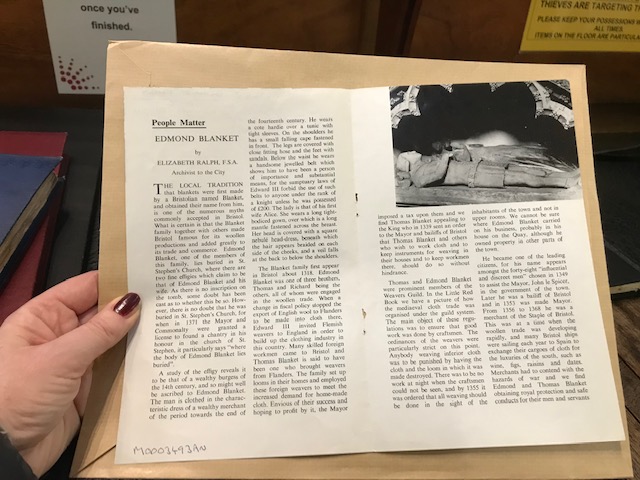
I found some absolute treasures amongst these articles.
bristol-blanket-angieparkertextiles

After a satisfying session reading all the available information, I found the evidence I was looking for to conclude that there is a good possibility that blankets were invented in Bristol. Of course, we’re looking at the 14th Century so this is a bit sketchy, but I wasn’t the first to investigate and come to the same conclusion.

And the conclusion?

In a nutshell, Thomas Blanket swapped the animal skins he had been sleeping under at night for the heavy woollen cloth he had woven on his loom, and immediately felt the benefit. He went on to reduce the cost of weaving woollen blankets by setting up several looms in his Bristol home. He side-stepped the lengthy apprenticeships required by the Guilds and made woven textile bed-coverings more affordable to the masses.

Five centuries later, the Oxfordshire town of Witney became the epi-centre of the British blanket industry and two separate histories there also credited Thomas Blanket from Bristol as the inventor.

The final document I came across was an article by local historian Eugene Byrne. He had researched the same story and had already created a perfectly succinct summary of all the findings. He has kindly agreed to let me share this below, rather than me simply write the same thing again if you’d like to read more below.

Blankets for the 21st Century

I’m delighted that, quite by accident, the 2020 version of The Bristol Blanket has been aptly named for more than one reason. I’m also equally delighted that the success of the original design has enabled me to bring more warmth and uplifting colour to homes in a new collection.

The rug weaving technique that inspired the colour blocks in the blanket is called Summer and Winter, and this subsequently inspired a summer version of the blanket with a joyful yellow, and winter, with a classic slate grey.

Whatever the weather, most of us have taken to turning our heating down in recent times, for both ecological and economic reasons. There’s never been a better time to invest in a quality woollen blanket for your home, and knowing that 10% of the profits from sales of The Bristol Blanket go to Mind-the mental health charity, is another good reason to choose this uplifting design.

Which season are you? Summer, Winter, or Original?

The official launch of these new colours is Spring 2022.

But if you like being ahead of the pack I’m offering an early-bird discount. Simply select SUMMER or WINTER from my online shop. Then use the code EARLYBIRD22 to receive a whopping 20% off your blanket. They’re available for immediate posting so will be with you in a matter of days.

bristol-blanket-summer-angieparkertextiles
Bristol Blanket-Summer Photo: Article Studio
bristol-blanket-winter-angieparkertextiles
Bristol Blanket-Winter Photo: Article Studio
The Bristol Blanket – Original Photo: Article Studio

Who invented the blanket? By Eugene Byrne January 2012

Bristol’s most colourful Victorian newspaperman, Joseph Leech, wrote an extremely fanciful account of the blanket’s invention/discovery. In a story in Brief Romances from Bristol History (1884, a collection of what were originally articles in the Bristol Times) he imagined ‘Edward’ Blanket struggling to make his weaving business a success. One very cold night he and Mrs. B were shivering in their bed covered only by a ‘camlet’ of goat hair. Then he had an idea; he went to his loom and took a length of woollen cloth he had been working on that day, and covered the bed with it. They slept snugly, and the following morning he told Mrs. Blanket that he was going to go into the bed-covering business.

“My dearest dame,” said he, “I shall have the honour of giving a name to the article that will make my fortune and carry down my name to all future ages. Let others devote themselves to making cloth to keep them warm by day; be it my business henceforth to manufacture only that which will keep folks warm by night.”

Leech went on to call for an annual Blanket Day, in which Bristol would celebrate Mr. Blanket’s most excellent discovery/invention.

Of course, the whole idea of the blanket being invented here is just a particularly bovine bit of local nominative determinism. The idiot and famously unimaginative ancestors leaping to a ridiculous conclusion, eh?

Well, yes, probably. But not definitely …

The words ‘blanket’ and ‘blanchette’ (plus assorted other medieval spellings) had been in use for at least 150 years before Edmund Blanket’s time. The Blanket family themselves might have got their name from being makers of this cloth, just as medieval blacksmiths acquired the surname Smith, and bakers became Bakers.

However, if you look closely enough, the idea of woollen bed-coverings being invented, or at least popularised, by a Bristolian is not completely ridiculous. It might, just might, have happened.

Only it wasn’t Edmund Blanket who did it. It was Thomas Blanket, who was Edmund’s brother, or possibly his father. Or maybe his son.

Weaving was medieval Bristol’s main industry, underpinning most of the town’s seaborne trade. It was tightly regulated by the guilds and the corporation to maintain the quality of the finished cloth and protect the interests of the weavers and associated trades.

King Edward III (reigned 1327-1377) started to change all that. He wanted the vast English cloth industry to be more profitable, all the better to tax it to pay for his wars. He restricted the wearing and importation of foreign cloth and the export from England of raw wool. He encouraged Flemish weavers to settle in England to build up the cloth industry. Some of them came to Bristol; the Blankets may have been Flemish themselves, or they may have brought in some of these foreign weavers.

In the late 1330s, Thomas Blanket set up several looms at his property in Tucker Street, just south of the Bristol Bridge. He was effectively setting up a factory, employing weavers rather than working as a self-employed artisan. Presumably, his weavers hadn’t had to serve long apprenticeships in the traditional manner. The guilds and the Corporation didn’t like this and tried to put a stop to it.

Immediately, however, word came back from the King saying that Blanket was not to be impeded in any way:

“The said Thomas and the others who have chosen to work and make cloths of this sort, and also the workmen, should be protected and defended from injuries and improper exactions on that account. Order you, that you permit the said Thomas and the others who are willing to make cloths of this kind to cause machines to be erected in their own houses at their choice for the weaving and making cloths of this kind … “

The direct personal support of the king means Blanket was no mere clothier, but a very significant figure. The Corporation got the message and hurriedly performed a u-turn, and Thomas Blanket was made a local official in 1340. Blanket’s importance and royal support would have made him a well-known figure.

We don’t know how people slept in the 14th century. Most poor people probably slept on the floor (perhaps on straw), fully or partially clothed, though getting completely naked to sleep was often favoured where possible as it helped get rid of the lice which infested most of our ancestors’ bodies.

The more prosperous classes owned beds and may have slept in linen sheets under animal skins. Woollen cloth, meanwhile, was expensive stuff, produced by artisans … Until ruthless entrepreneurs like Thomas Blanket came along.

Blanket’s industrial production methods, however small they were by modern standards, may well have gone some way towards making woollen bed-coverings more affordable and fashionable. It’s possible that they became known by the name of the family who was making them.

There’s another intriguing scrap of circumstantial evidence from Witney in Oxfordshire. Witney was famous in the 19th and 20th centuries as the centre of Britain’s blanket industry. Until the duvet came along, almost everyone in Britain went to sleep under Witney blankets. Two separate 19th-century histories of Witney both credit the invention of the blanket to “Thomas Blanket” or “Thomas à Blanket” of Bristol. (Giles, J.A.; History of Witney (J.R. Smith, London, 1852) and Monk, W.J.; History of Witney (J. Knight, Witney, 1894))

The good folk of Witney would have no reason to credit the main source of their prosperity to a Bristolian unless there was a strong local legend there, too.

So then, in summary: Few people, if any slept under woollen blankets until they became affordable and/or fashionable. Thomas Blanket’s industrial production methods would certainly have brought down the price of woollen cloth. He was a minor celebrity who was known throughout the land, and he was credited with inventing blankets not just in Bristol, but in the Oxfordshire village where their manufacture would become the main local industry.

Nope, we can’t yet definitively prove a Bristolian named Blanket invented woollen bedclothes. But I don’t think there’s any definitive proof that he didn’t either.

In the Studio Photo: Alice Jane Hendy Photography

Angie Parker is a weaver, designer, and colourist, based at BV Studios in Bedminster. She trained in rug weaving in the 1990s and started her textile practice in 2014. Her latest collection of handwoven designs and small-batch-produced textiles are available in her online shop. Subscribers to her newsletter are the first to see new designs and also get access to special offers and exhibition news. Sign up here to keep in the loop.

Would you like 2 tonnes of wool with that?

When the once-in-a-lifetime opportunity to purchase the entire contents of the Collingwood rug weaving workshop came up, my gut instinct, without much hesitation, was to snap it up.

Admittedly, the UK’s most prominent and successful rug weaver, Jason Collingwood, announced his retirement a little sooner than I had expected. I wasn’t quite ready, but it was only a ‘small’ matter of logistics.

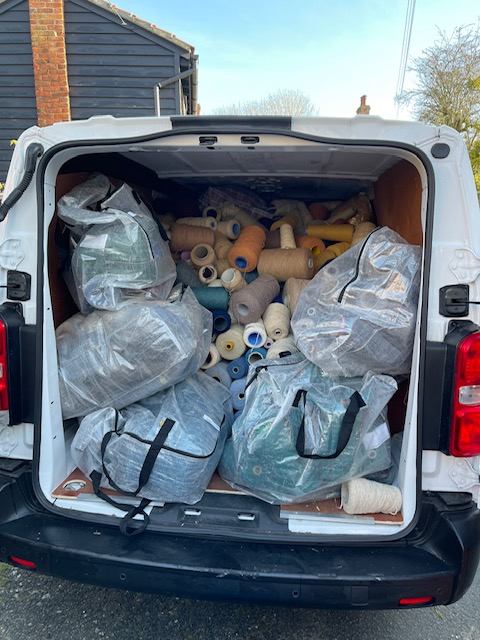
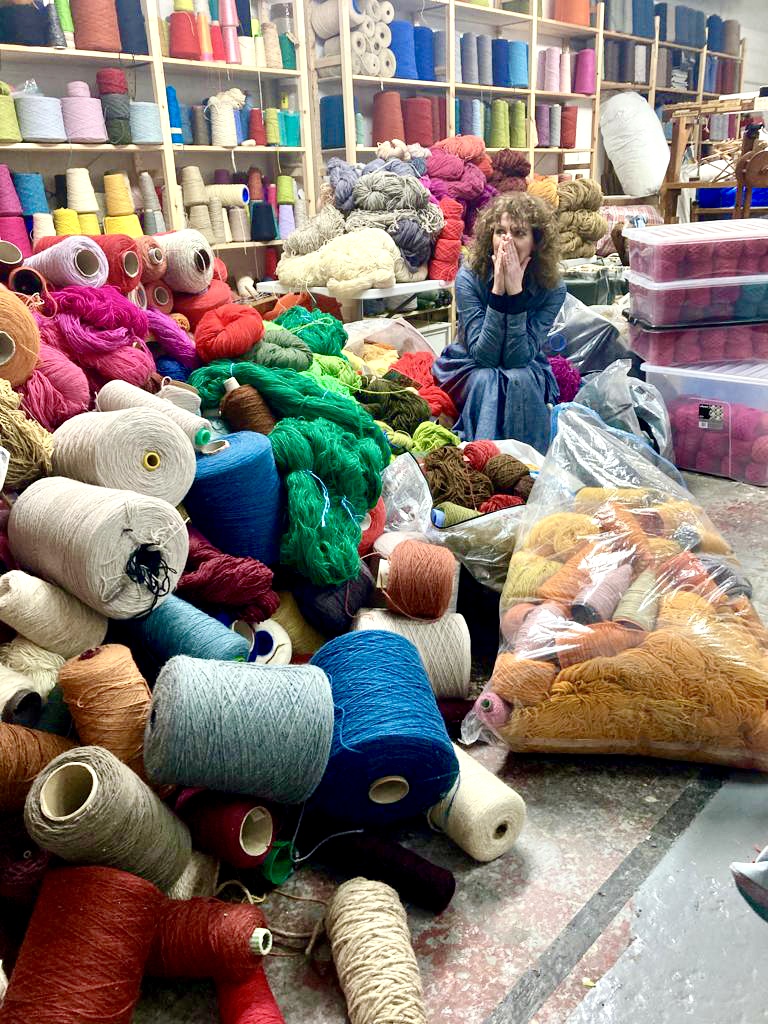
I simply had to move three full-size looms, all the additional equipment, and approximately 2 tonnes of yarn from Nayland in Colchester, to my shared studio space in Bristol. Only that! Oh, and the sampling loom made from a piano! Fortunately, the reality has allowed this to happen in stages, so much less overwhelming.

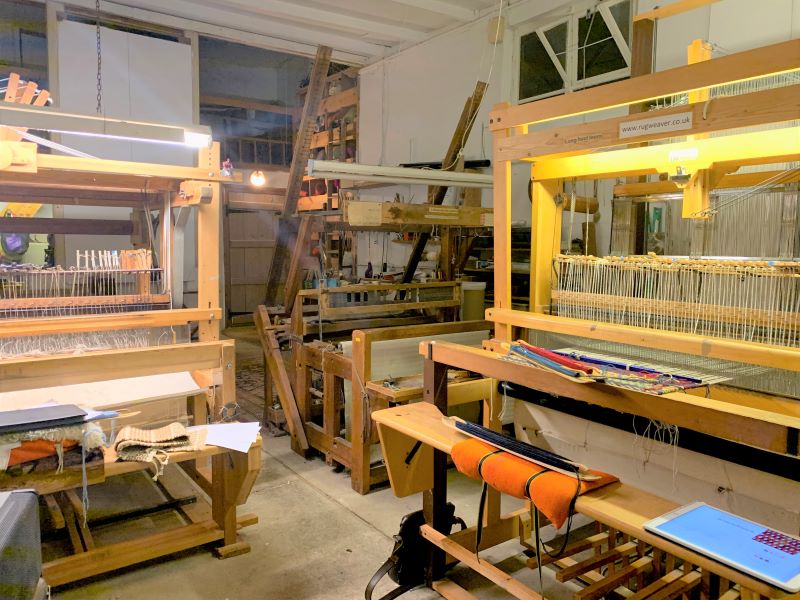
Three looms in the Collingwood workshop-Nayland. Photo: Theo Rooden

Serendipity

There were signals from the onset that this was the right move.

Firstly, I’d set my heart on one day owning the Harrisville shaft switching loom after weaving a rug on it in 2014. I voiced this intention at the time, and possibly a few times since, which put me at the top of the list when Jason decided to sell up. (Does anyone reading know if there are any more of these looms in the UK?)

The fact that I could make the figures work was obviously the biggest factor.

Initially, I expected to move my workshop to new premises for more space. However, in a serendipitous twist, the two adjoining spaces in my studios became available (was it something I said?), and I was able to expand without having to move.

It’s a bit of a squash and a squeeze and it certainly ain’t ‘Instagram pretty’, but it’s working for me and I love being at BV Studios. I can walk to work and it’s filled with so many amazing artists and friends.

Closing a chapter and cobwebs

The move is taking longer than originally estimated, but personally, I think this is better than an abrupt end to this chapter. There’s so much weaving history and some incredible cobwebs in The Old School and I’m conscious to be respectful of what came before. Two more trips should cover it though and I’ll miss my 24-hour mini-breaks driving a white van.

In the meantime, I’m knuckling down to some intense core strengthening and some hardcore rug weaving. And whilst I’ve no inclination, nor the skill set to emulate the prolific business model used by the looms previous owners, I do have productivity targets that require an improved level of stamina and endurance. (Note to self-Time to Plank).

Insane or savvy?

And the wool… Yes, let’s not gloss over the wool-shaped elephant in the room. A wise friend advised me not to go near it, but I’m trusting my gut instincts as they’ve served me well so far, and a deal’s a deal.

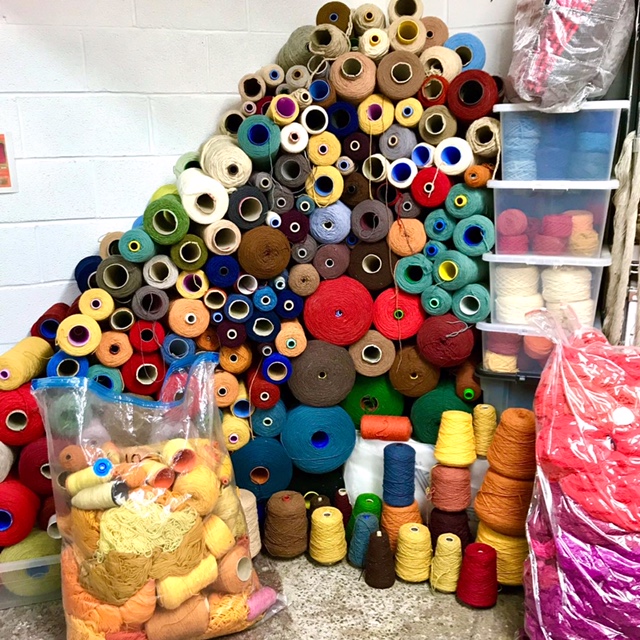
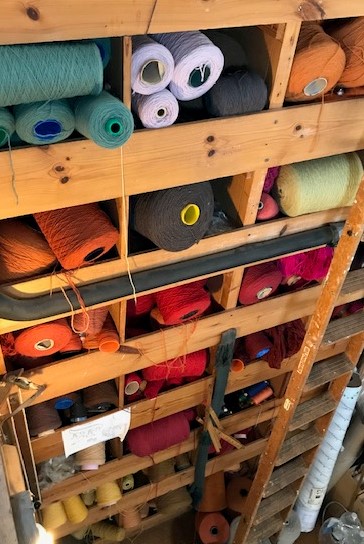
One section of the wool storage in the Collingwood workshop.
Ridiculous…

That said, my inner critic is screeching expletives on a regular basis about the ridiculous amount of yarn I’ve just transported across the country. Luckily, my inner advocate is louder, and I’m reminding myself that I now have the option to grow my business without buying new raw materials…ever again!

I’ll also try to sell what I don’t need over the coming months so drop me a line if you’re in the market for some good quality sustainable wool.

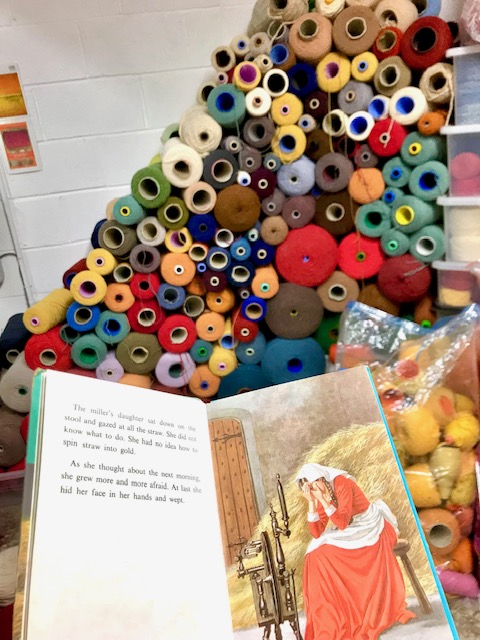
Life is a fairytale…by the brothers Grimm. Illustration: Vera Southgate

Yes, right now I feel I’m playing all the key roles in a weaving version of Rumpelstiltskin, although fortunately, no infants need to change hands in return for weaving this heap of wool into rugs.

There’s plenty more to share about my plans for this unusual business move. It feels nuts to be surrounded by more wool than I’m ever likely to weave, and so many looms.

However, it also feels right that this special collection of looms is staying together for the time being, and I’m looking forward to the time when I can open my studio doors for other weavers to use them, while I (to coin someone else’s phrase), pick up the baton to take on the world…one rug at a time. That should be shuttle really, shouldn’t it?

Angie Parker Phtoto: Alice Hendy Photography

Angie Parker is a weaver, designer, and colourist, based at BV Studios in Bristol. She trained in rug weaving in the 1990s and started her textile practice 8 years ago. Subscribers to her newsletter are the first to see new designs and also get access to special offers and exhibition news. Sign up here to keep in the loop.