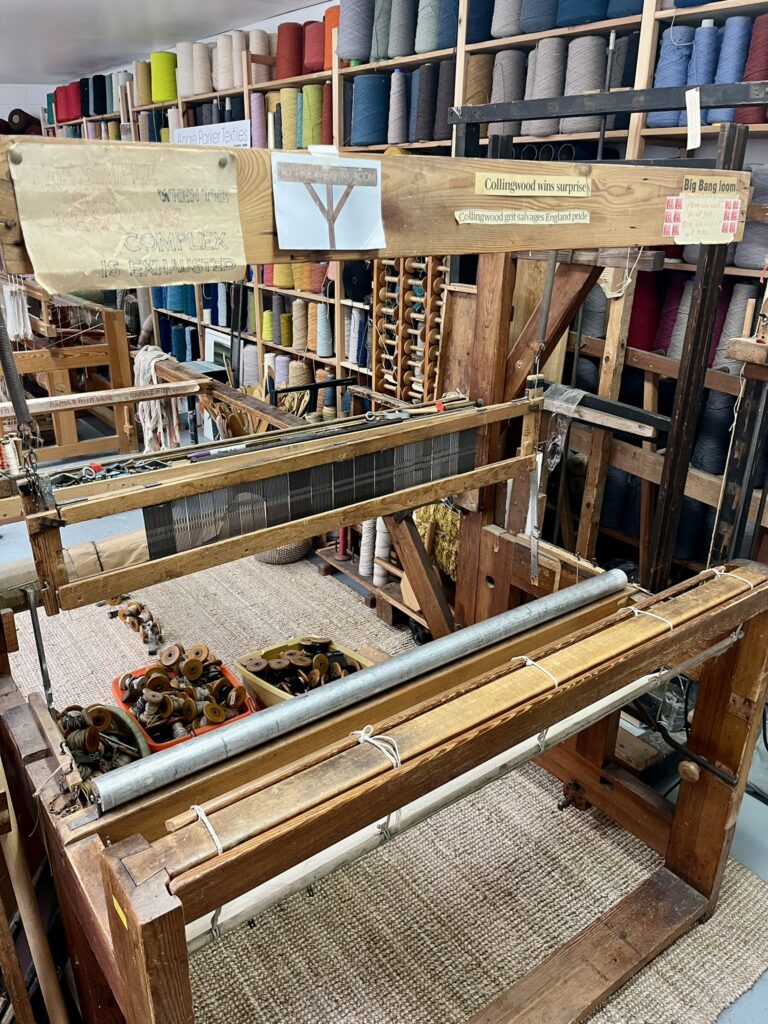
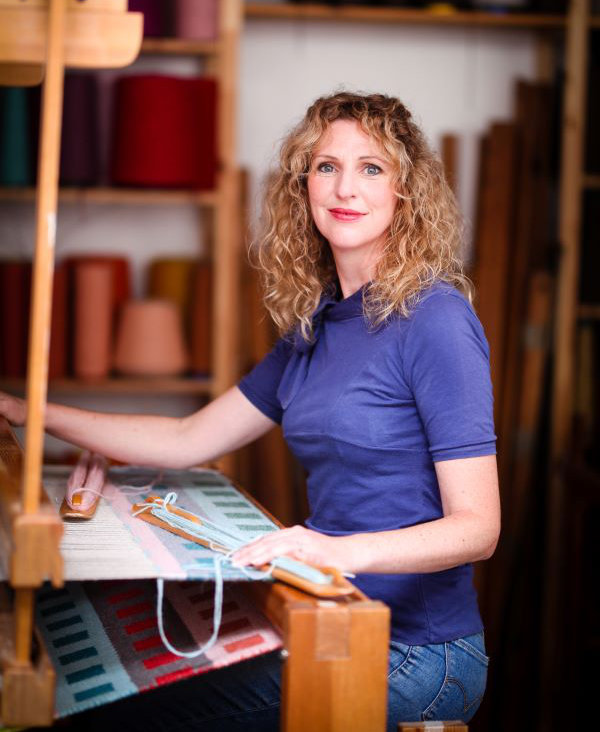
Peter Collingwood Original Macrogauze Loom in Angie Parkers Bristol Studio
The answer is of course, weave with it, because old looms are pretty sturdy things.
However, this isn’t just any old loom. It’s is the original Macrogauze loom engineered by one of the 20th Century’s seminal weavers, Peter Collingwood OBE 1922 -2008.
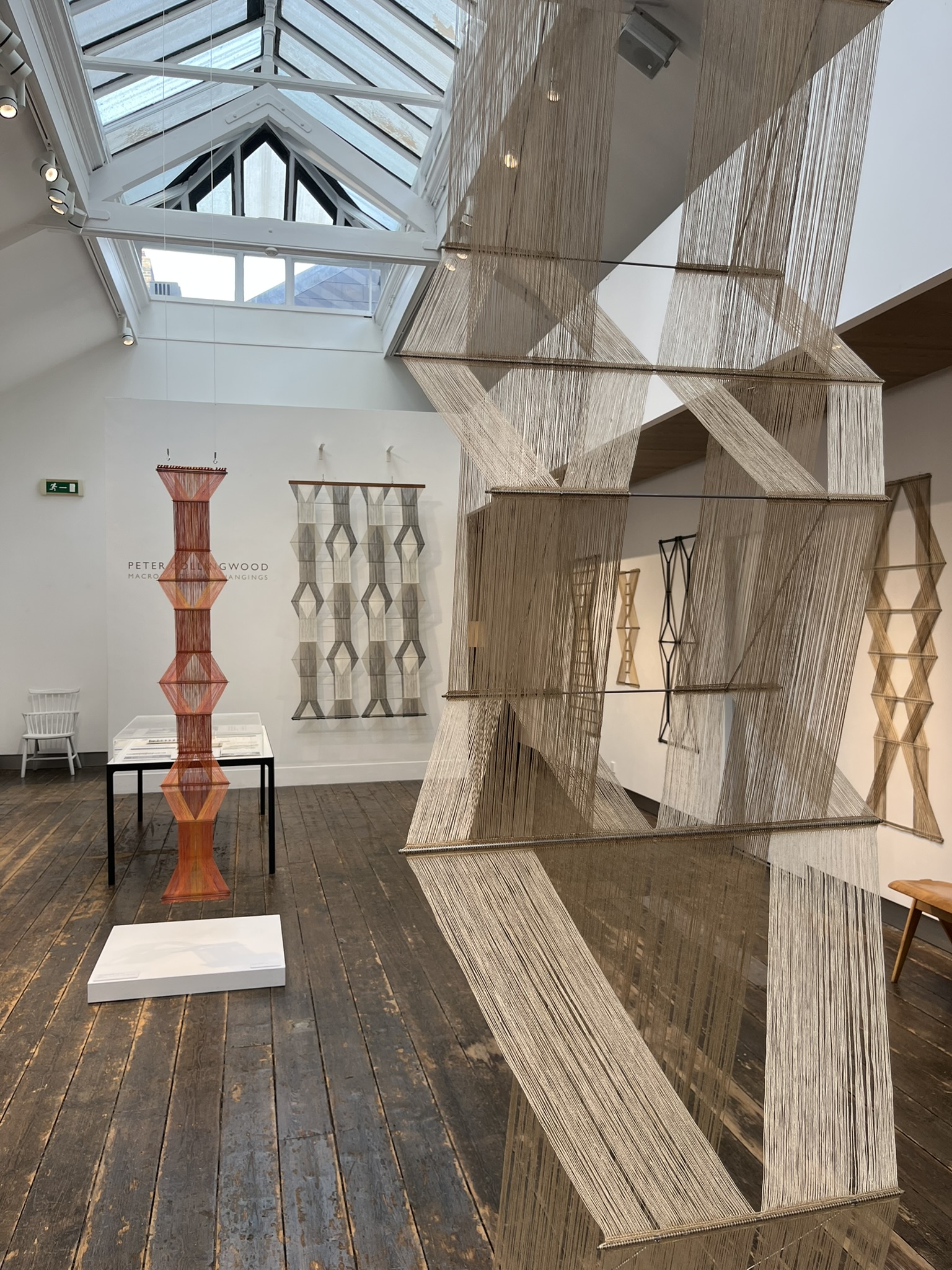
Macrogauze Artworks by Peter Collingwood OBE
A selection of the fruits of this loom, are pictured below; the unmistakable Macrogauze hangings. These were exhibited in the 2025 show at Margaret Howells London Store. A rare opportunity to view the work close up. Did you catch it?
Macrogauze Artworks by Peter Collingwood at Margaret Howell London Store.
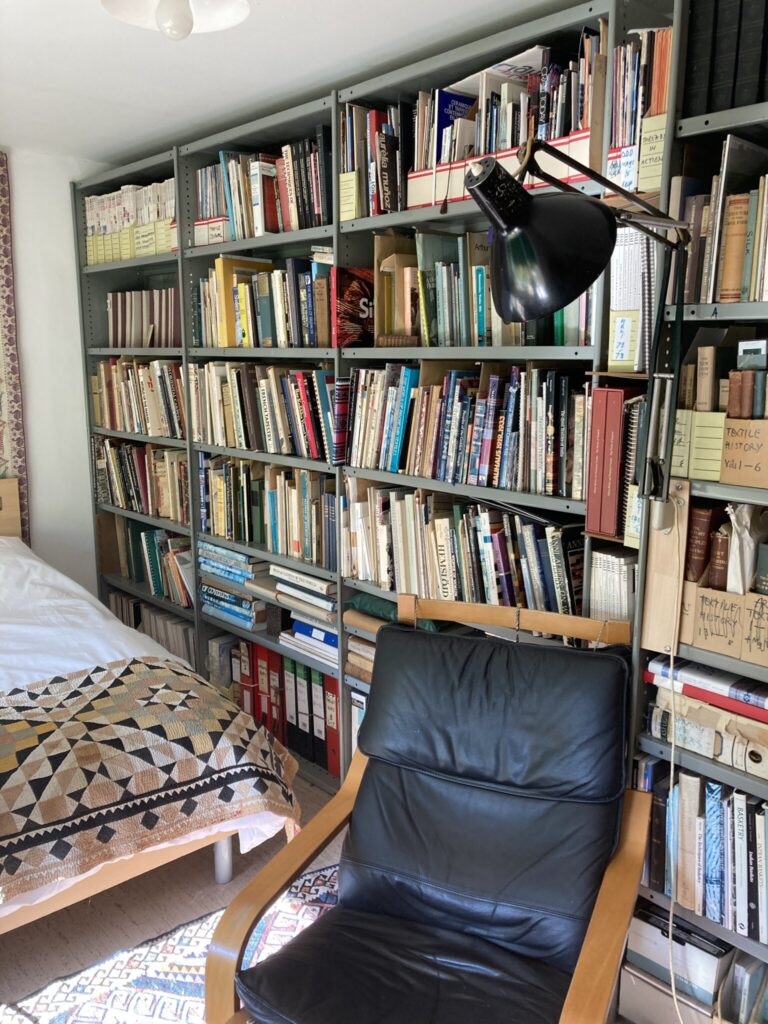
However, the contents of Collingwoods workshop and his collection of over 1000 books on weaving, plus a few other treasures are in my Bristol weaving studio.
I’ve had them for a few years now, although I knew I wasn’t really ready for the expansion when it first happened. It feels, at last, like I’m finally adjusting to the acquisition.
Loom with a view
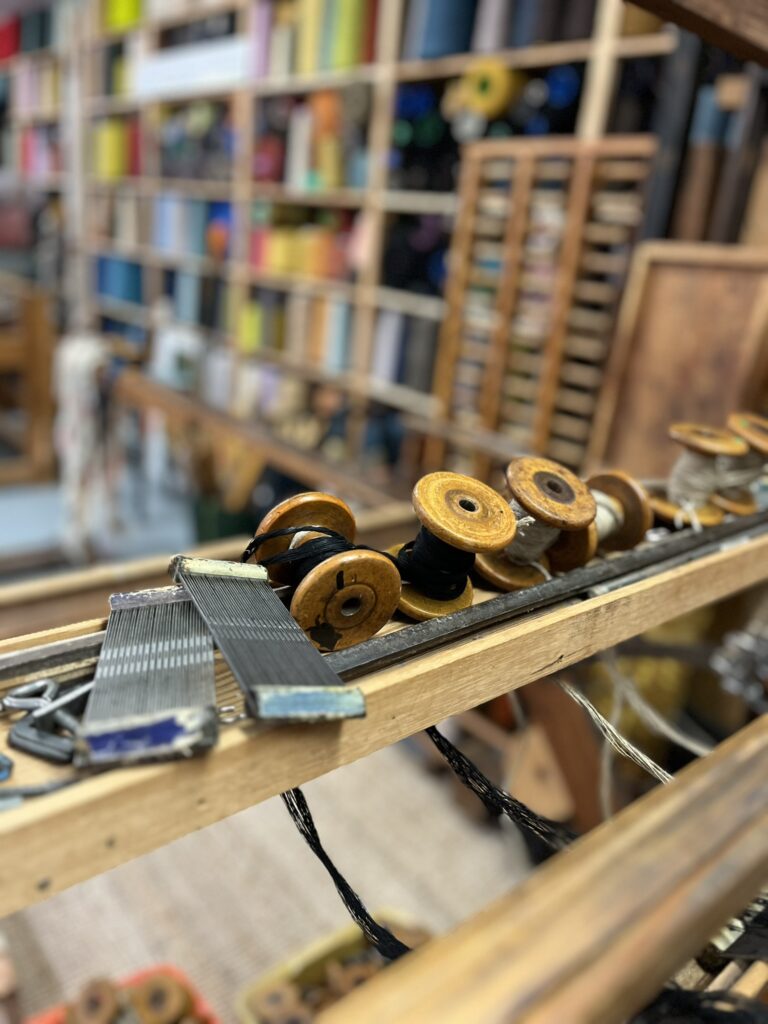
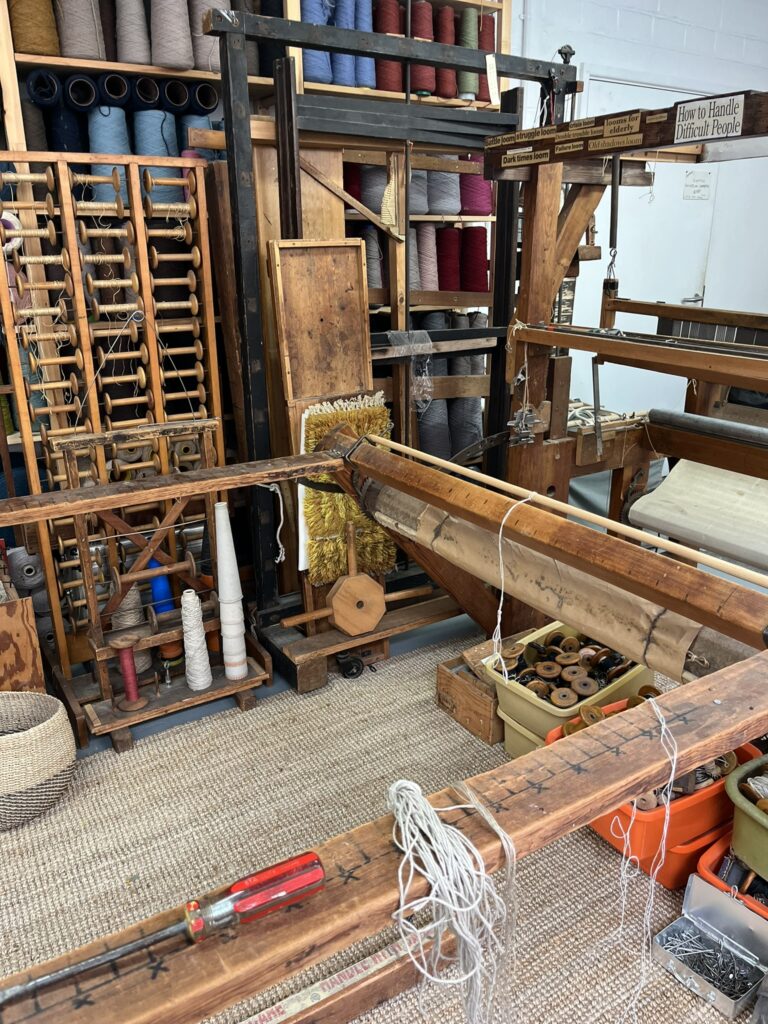
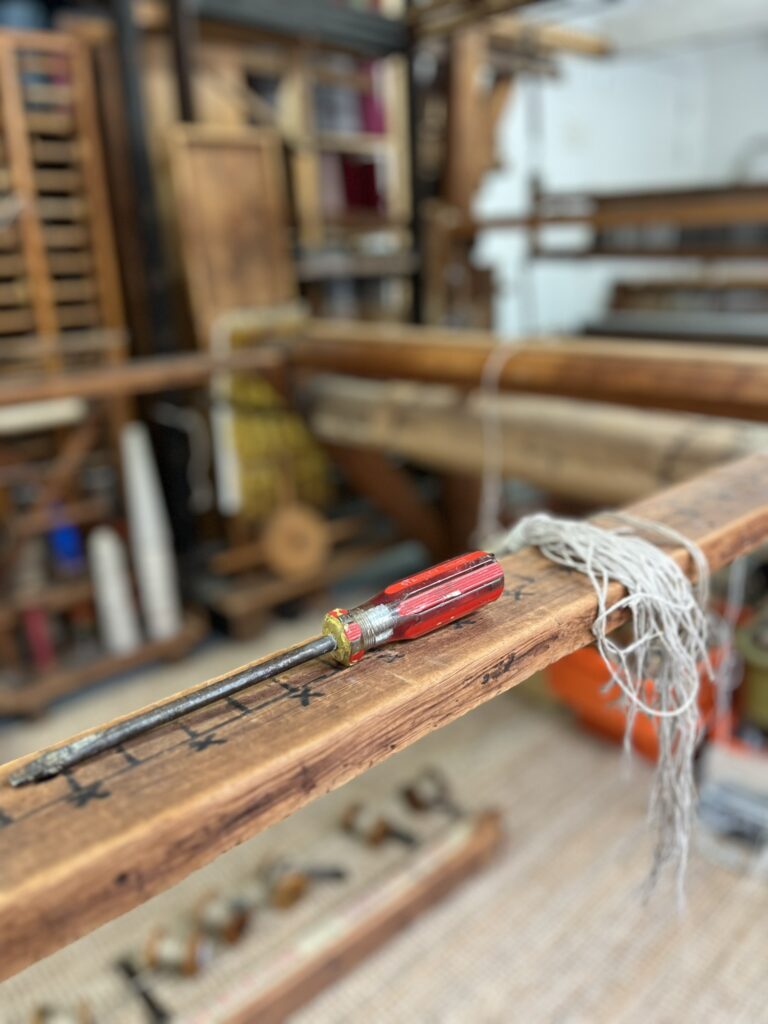
Macrogauze loom, warping mill and bobbins. Starting to look at home after a busy few years.
A Weaving Resource Centre in Bristol
I intend to share these specialist resources with those who might be interested, including and beyond my existing network. A long-term slow project.
This blog post is one way to spread the word and to discover if there is an appetite for a ‘weaving study centre’ in the heart of Bristol…
I want to build up a picture of who might want to know where the looms and books are for starters. ( I didn’t use the opportunity to connect with others during the Margaret Howell show but hopefully I can make up for that now).
One aim is to see looms (and books) being used to innovate and educate, and not simply replicate what has already being produced. (Although tempting, I have been reminded frequently that imitations would go against the Collingwood ethos).
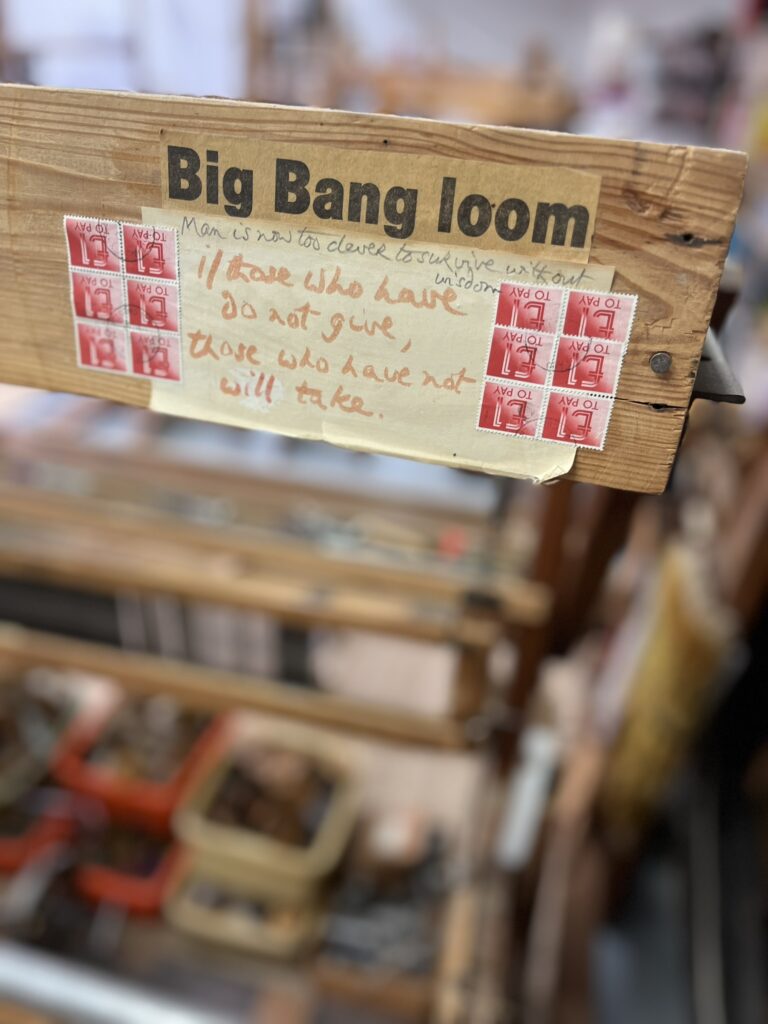
Poignant handwritten quotes and newspaper clippings on the looms.
Conservation, Restoration and Innovation
Coincidentally and serendipitously, an old theatre friend (who conveniently retrained as a book conservator) visited my studio recently. We had an an enlightening conversation about just how far I could or should go in preserving the Collingwood looms and library.
He offered recommendations for preserving the newspaper clippings and notes on the loom. (pictured). The things that give it extra character. However I don’t believe the previous owner would be into this level of preservation. A photo record will suffice for now should any damage occur. (I’m interested in your thoughts about this too).
His suggestions for the long term care of the books is for another blog post.
Please get in touch if you’d like me to keep you in the loop regarding the future of these special old looms and if you’d like to be part of the conversation. ( I’ve not mentioned the other looms yet…)
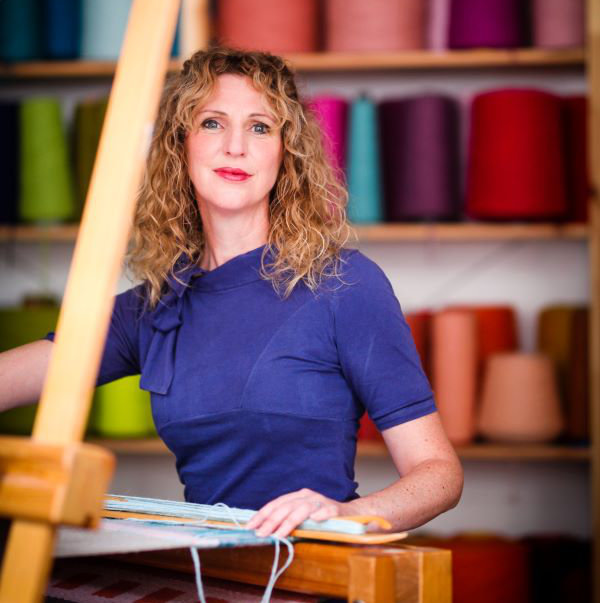
In the Studio 2020 Photo: Alice Jane Hendy Photography
Angie Parker is a weaver, designer, colourist, instructor and unintentional archivist.
She trained in rug weaving and has been weaving krokbragd since the early the 1990s, but only started her textile practice in 2014 following a career in theatre costume. She hand-weaves rugs and wall-hanging in her Bristol studio. Occasionally her designs are produced in small batches through partnerships. Angie teaches when her schedule allows. You will currently find her buried underneath 2 tonnes of rug wool. Sign up to her newsletter here, for updates once she emerges.
How a remarkable vintage Swedish hand-written book landed in my lap.
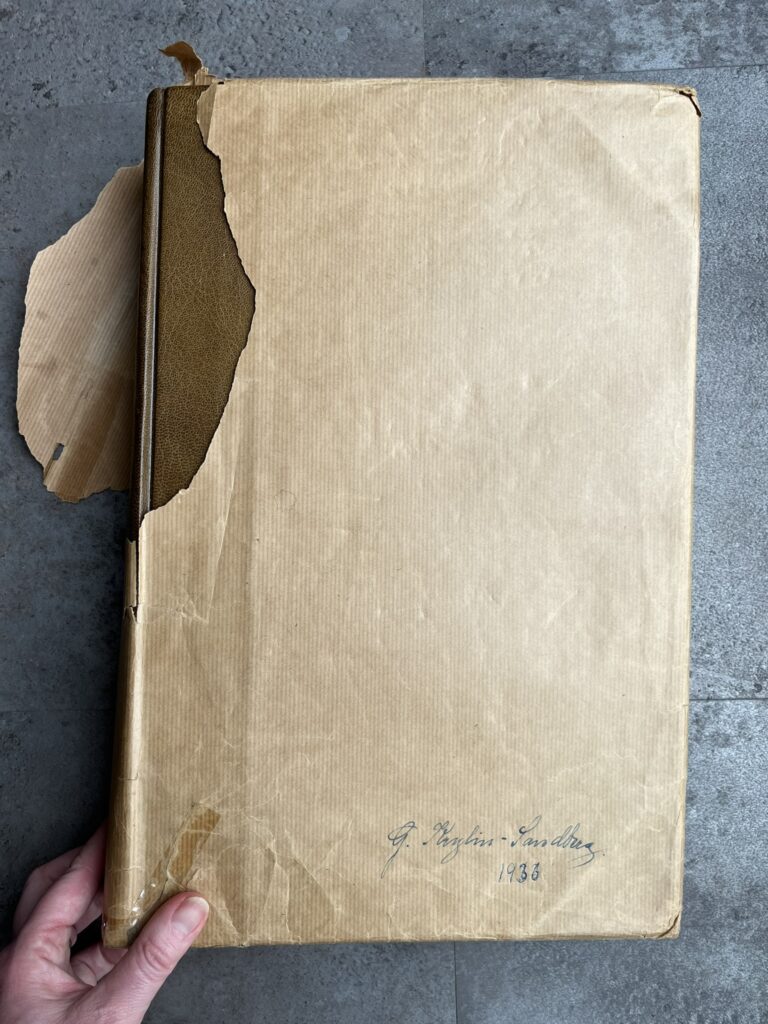
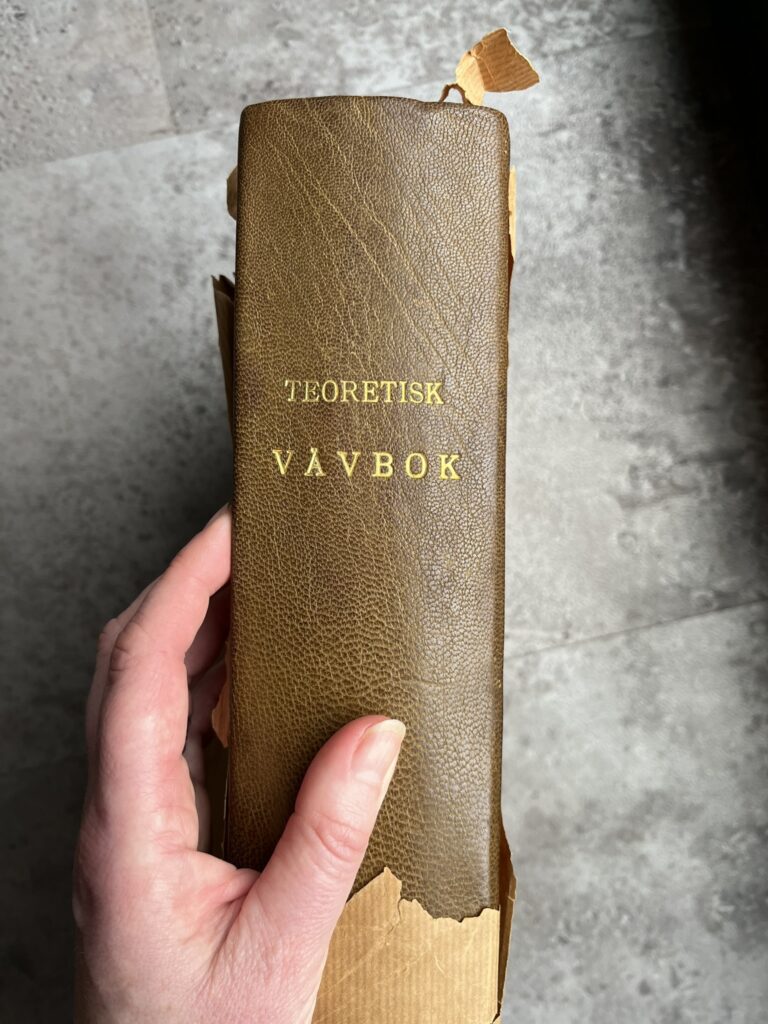
Don’t judge a book by a very unassuming cover…
In the summer of 2024 I became the owner of the late Peter Collingwood’s collection of over 1000 weaving books and periodicals. (This followed the rest of the contents of his Nayland workshop but that’s another story).
It’s safe to say that I’m unlikely to run out of weaving books to read in my lifetime and really have no need to source anymore.
Some of my current book collection in it’s former home at The Old School Workshop in Colchester
However, when a chance conversation with a fellow guest at a friends wedding led to the topic of weaving, the eyes of my new found friend lit up. “I’ve a book that I think you’d like..”
She described the book and although I don’t remember the details of our conversation, (wine may have been flowing), I clearly showed enough interest that it was decided that the book (or textile treasure as I was soon to discover) was coming to me.
When I did finally lay eyes on this absolute treasure I couldn’t quite believe my good fortune.
It’s a privilege to add this textiles treasure to my weaving library.
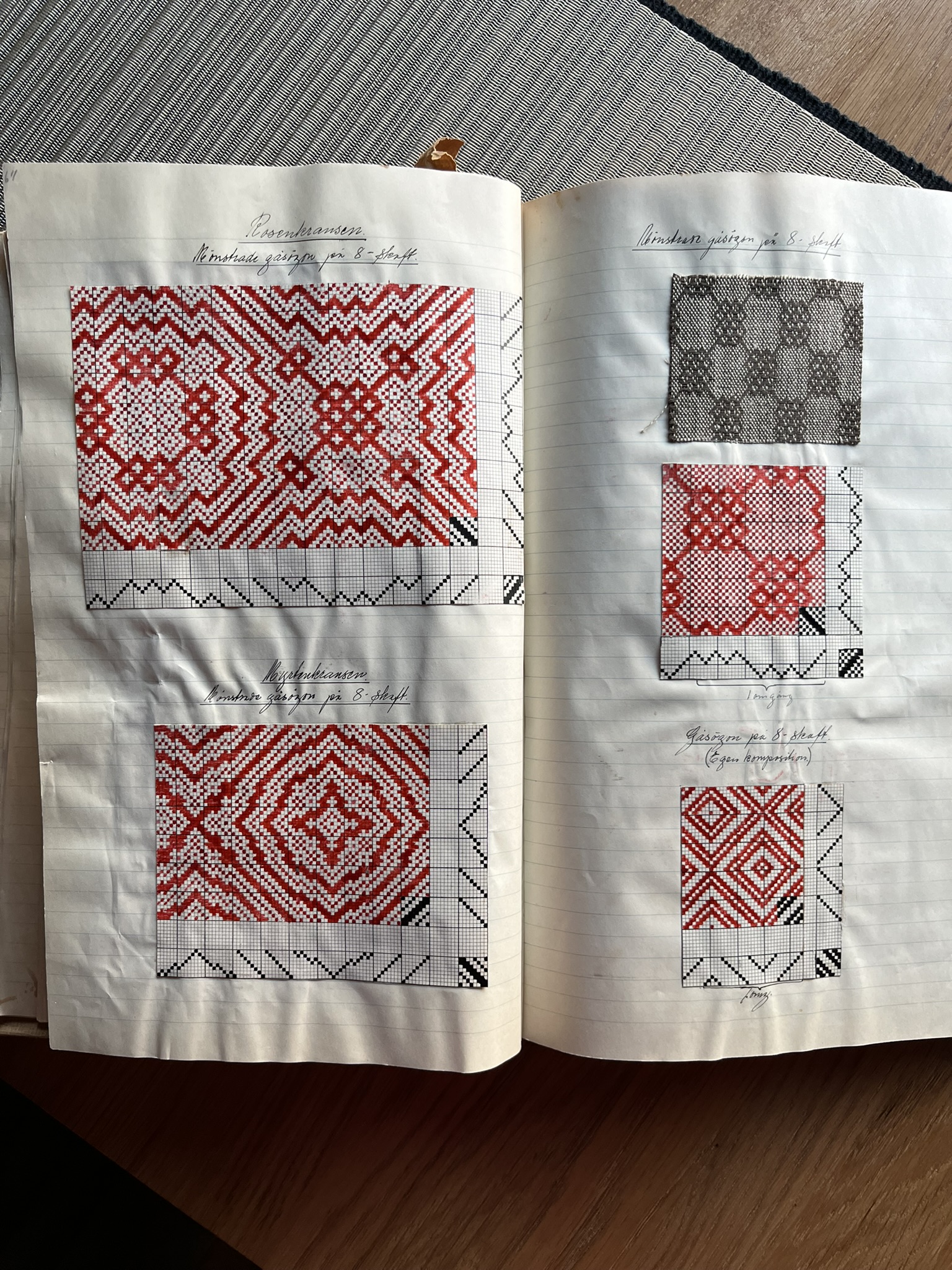
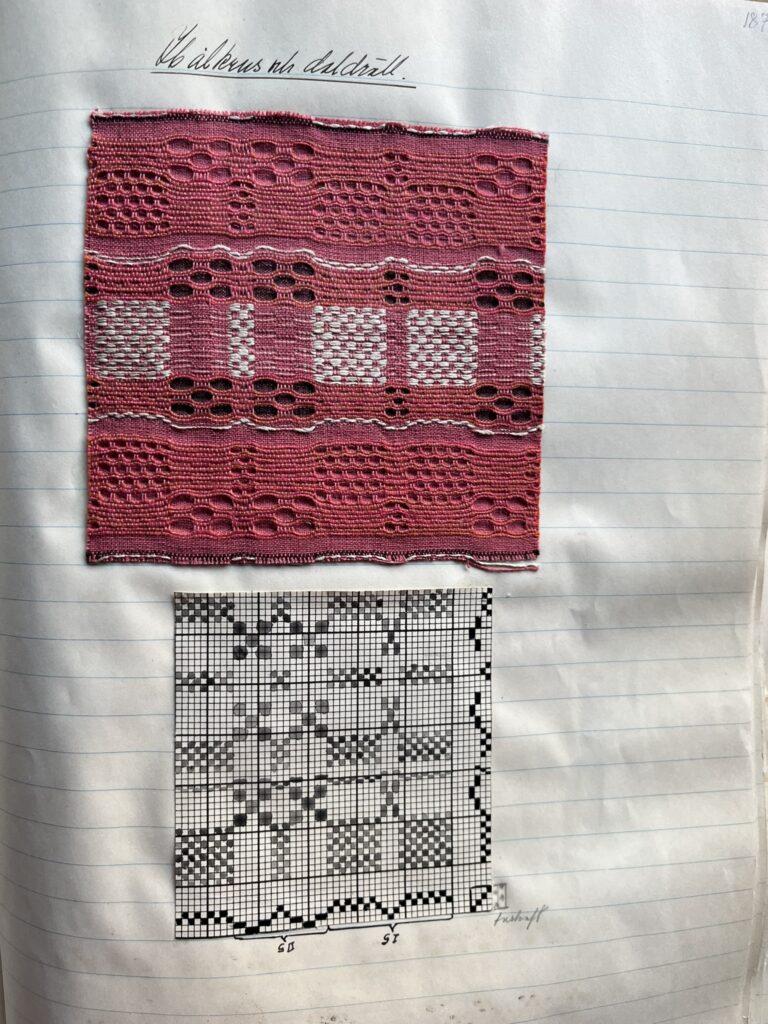
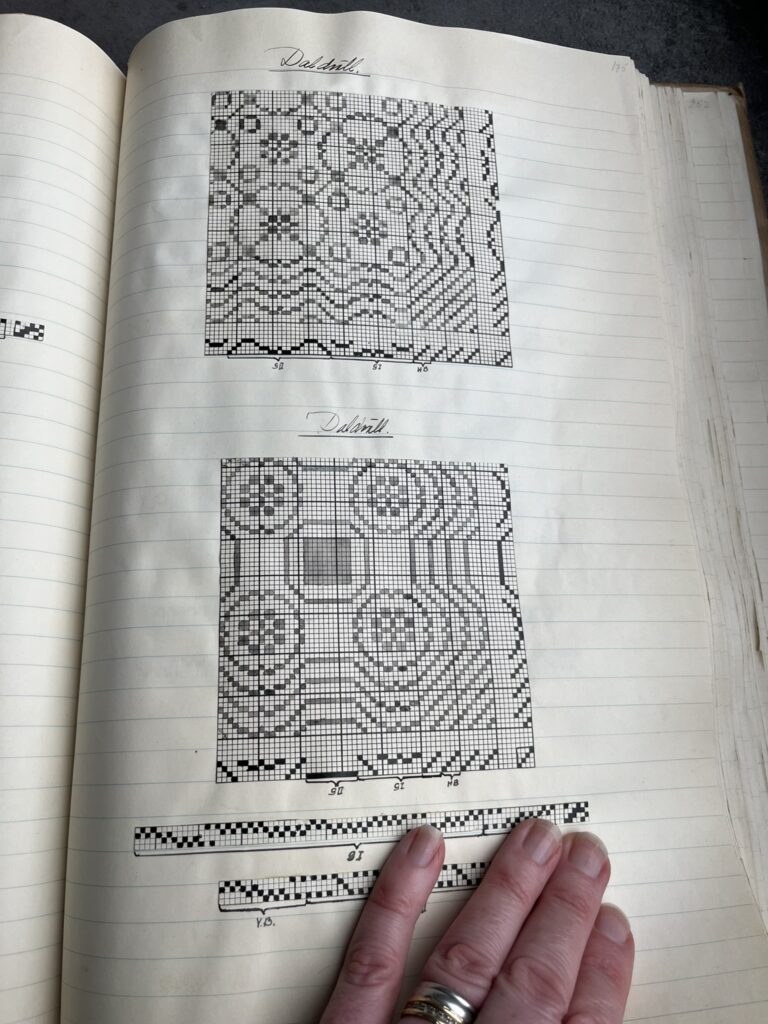
Each draft is painstakingly hand painted
The intricate handwoven samples are exquisite
Each of the 253 pages is a work of art
It is truly exquisite and I feel incredibly privileged that it’s now in my library.
Here’s what I know about the author so far:
Gundla Gustafson. Born April 16th 1915 in Äsperöd, a small village 50 miles to the east of Malmo in Sweden. One of 7 siblings, two boys, and five girls all of whom were trained weavers but she was the star. She married in her late thirties, outlived her husband, lived on her own until she was 99 and then in a care home for 2 years and died aged 101.
What next?
I’m really looking forward to finding about more about Gustafson as her nieces widower has family records that I believe he is happy to share with me. I’ll update this post in due course.
When I set out in business I had no expectation that my job would ignite an interest in conservation and historical textile research. However, these happenstance acquisitions do suggest that the universe is sending me down this path don’t you think? I feel that opening a ‘specialist weaving resource centre’ for future generations might be moving up my ‘to-do’ list…
If this sort of thing interests you too, or you’d like to hear about opportunities to visit my studio and library please may I ask that you sign up to my mailing list and also drop me a short email. I’m currently tied up with weaving orders in the studio, but I’ll create a database with expressions of interest so I know where to find you when I’m ready for the next phase.
KROKBRAGD – CONTEMPORARY WEAVING WITH COLOUR. Order here.
How can you tell when a non-writer is writing a book? Take a look in their kitchen cupboards. (They’re likely to be suspiciously tidy!)
As part of a 2014 business training program by The Crafts Council, I was asked to write a list of career aspirational goals beyond my wildest dreams. Writing a book about krokbragd was not on that list!
However, ten years later…
Like most non-authors, writing a book on the topic I’ve been passionate about for over 30 years was something that sat in the periphery of my consciousness, alongside things like running a marathon, mastering the piano, and sustaining a crop of tomatoes. Challenging and fulfilling things things that I most likely won’t get around to in this lifetime.
But when I was asked by The Crowood Press publishers at the beginning of 2022 if I would write a book for them, the flattery overcame any resistance and I agreed to deliver 50,000 words and images by February 2024. This would give me two years from the start of the conversations. Ages! I’ll have it done in eighteen months…easily!
It turns out that I’m with Douglas Adams when it comes to deadline, as he famously retorted,
“I love deadlines. I love the whooshing noise they make as they go by”.
Yes, the plan of suggesting a long lead time with the intention of delivering early was the sort of line that could win a prize at the Edinburgh Fringe Festival for it’s ‘laugh out loud’ sheer idiocy. How a woman in her fifth decade still hasn’t accepted that tasks will always grow to meet the deadline is the second most surprising thing about this book. The first, is that it did in fact get finished as is now available to order through my website. Yes, I actually did it!
KROKBRAGD – CONTEMPORARY WEAVING WITH COLOUR. Actually existing beyond the million files in my long suffering and now unrepairable laptop.
Writing the book was an interesting experience and I enjoyed most of it. I took some advice from writer friends and focused on small chucks and tried to be disciplined. (Well, apart from a bit of Tupperware sorting on occasion). The book itself follows a popular formula covering history, equipment, materials, technical skills, inspiration, planning design, colour, rugs, applications and projects. Actually finishing the book and getting it in the right shape to deliver to the designer, however, was a whole different skill-set and not one that was suited to my ad-hoc methods of working. But; I persevered, asked for help when I got stuck, and eventually the final red line went through the last item on the seemingly never-ending to-do list. The sense of relief overshadowing any feeling of achievement in that moment.
In between the lines (and the 400+ photographs) I now see the incredible talent of the designers and editor who created a beautiful layout from the huge number of files I sent to the publishers inboxes. I see the generosity of the books contributors and supporters, the teachers who passed on their weaving skills and the friends, family and colleagues who encouraged and supported me along the way. The acknowledgements on the back page was by far the easiest part of the book to write and I could probably have written another 50,000 words on that. (And yes, I’m sorry for everyone that I missed out!)
So, here it is. A hardback book about contemporary krokbragd weaving, with my name and designs on the cover. It’s quite surreal and I’ve a new level of respect and admiration for anyone who has ever written a book before, and I’m in complete awe of those who do it for a living.
I had created these blankets in response to the pandemic and it was local customers who brought my attention to Bristols’ link to the origin of blankets. But is there any truth in the rumour?
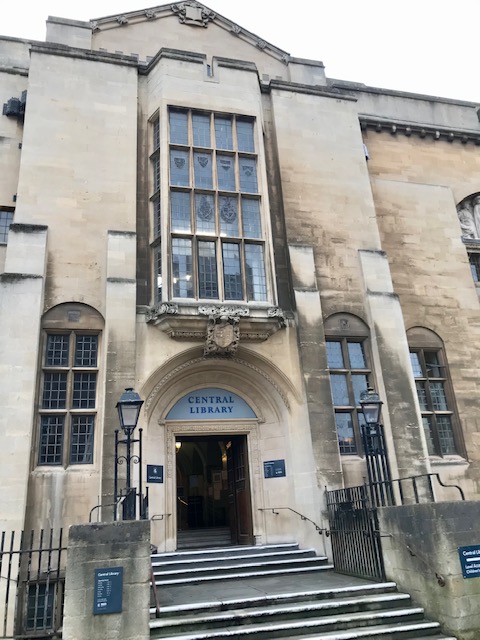
Channeling my inner Blomkvist and Salander from Stieg Larssons’ Dragon Tattoo series, I headed to Bristol Central Library archives to investigate.
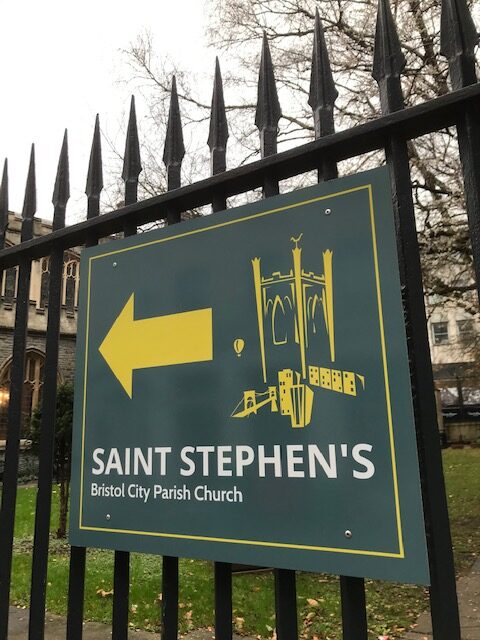
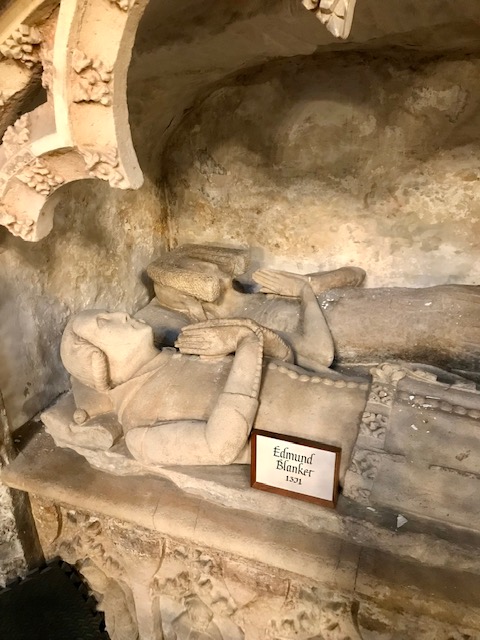
En route to the library, I nipped into St Stephens Church to take a closer look at the tomb of Edmund Blanket and his second wife, Margaret.
Urban myth or historical fact?
The story goes that it was this Flemish merchant and wool manufacturer who invented Blankets, but the tomb gave up little information. There isn’t an inscription, but there is evidence to suggest that this is indeed the Blankets. This includes the clothes worn by the effigies and the modifications to the tomb tie in with the re-building of the church. The timeline fits. Next stop; Central Library…
Bristol central library
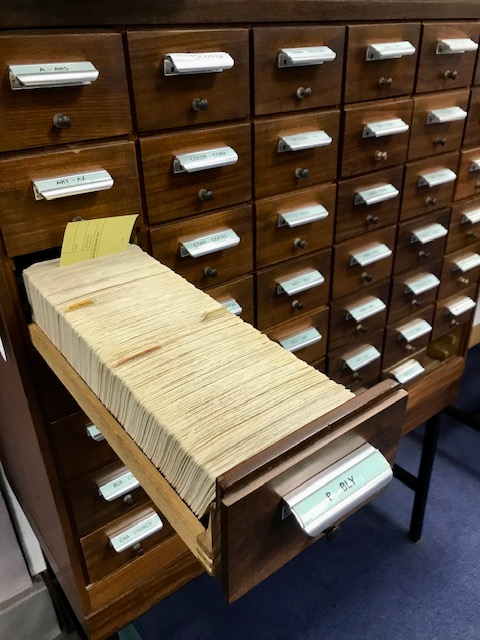
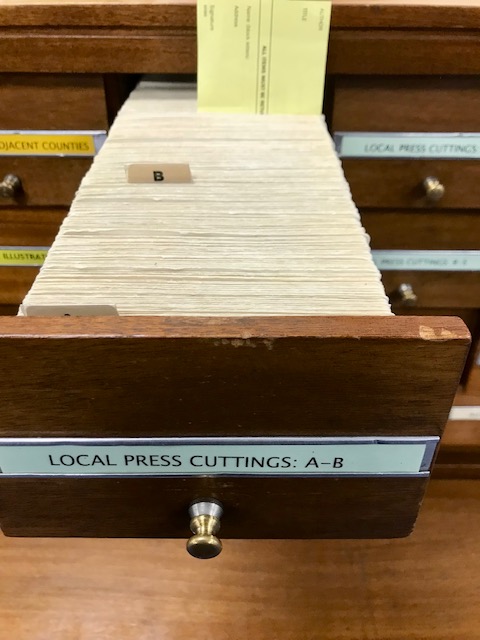
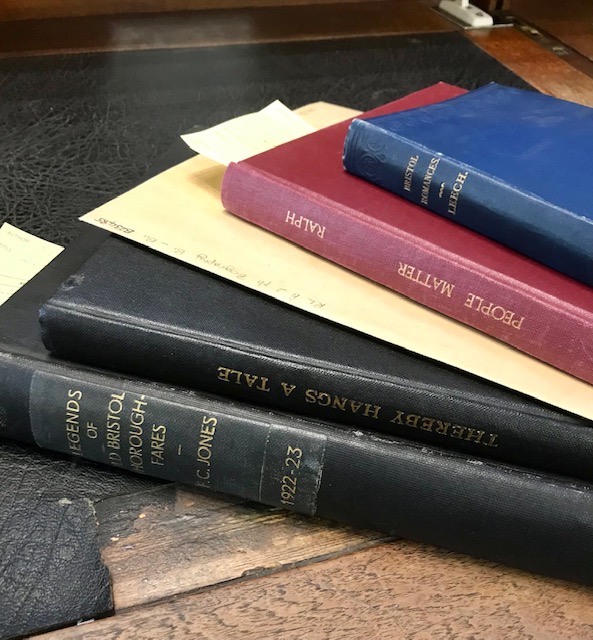
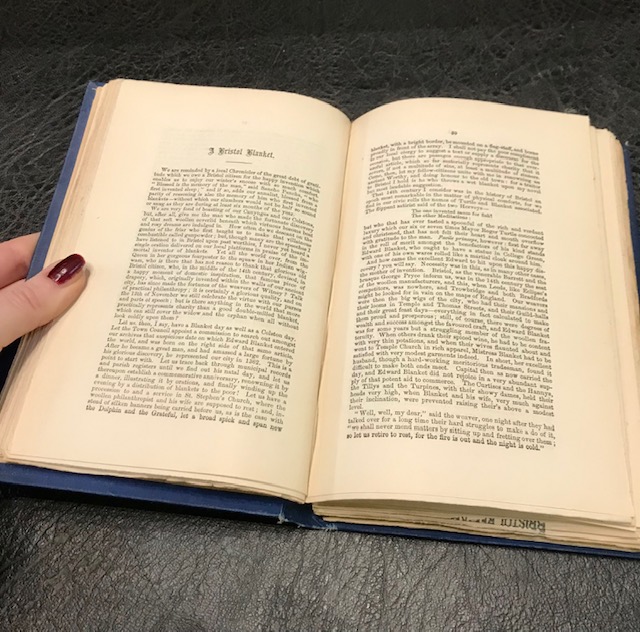
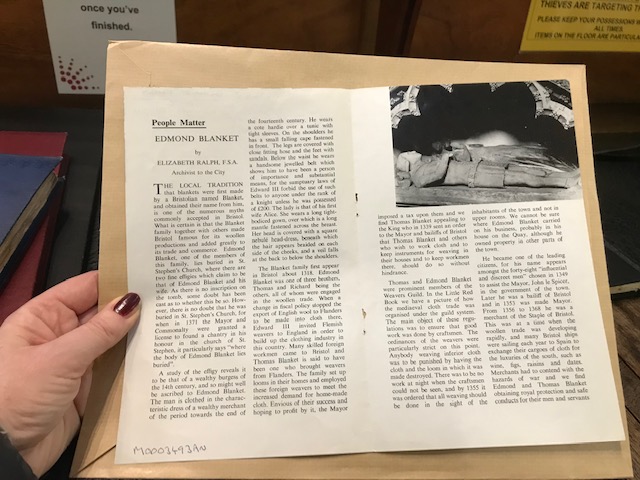
The information in the archives was much more revealing, and at this point, I need to give a shout-out to the librarians and archivists who helped with this task.
I found some absolute treasures amongst these articles.
After a satisfying session reading all the available information, I found the evidence I was looking for to conclude that there is a good possibility that blankets were invented in Bristol. Of course, we’re looking at the 14th Century so this is a bit sketchy, but I wasn’t the first to investigate and come to the same conclusion.
And the conclusion?
In a nutshell, Thomas Blanket swapped the animal skins he had been sleeping under at night for the heavy woollen cloth he had woven on his loom, and immediately felt the benefit. He went on to reduce the cost of weaving woollen blankets by setting up several looms in his Bristol home. He side-stepped the lengthy apprenticeships required by the Guilds and made woven textile bed-coverings more affordable to the masses.
Five centuries later, the Oxfordshire town of Witney became the epi-centre of the British blanket industry and two separate histories there also credited Thomas Blanket from Bristol as the inventor.
The final document I came across was an article by local historian Eugene Byrne. He had researched the same story and had already created a perfectly succinct summary of all the findings. He has kindly agreed to let me share this below, rather than me simply write the same thing again if you’d like to read more below.
Blankets for the 21st Century
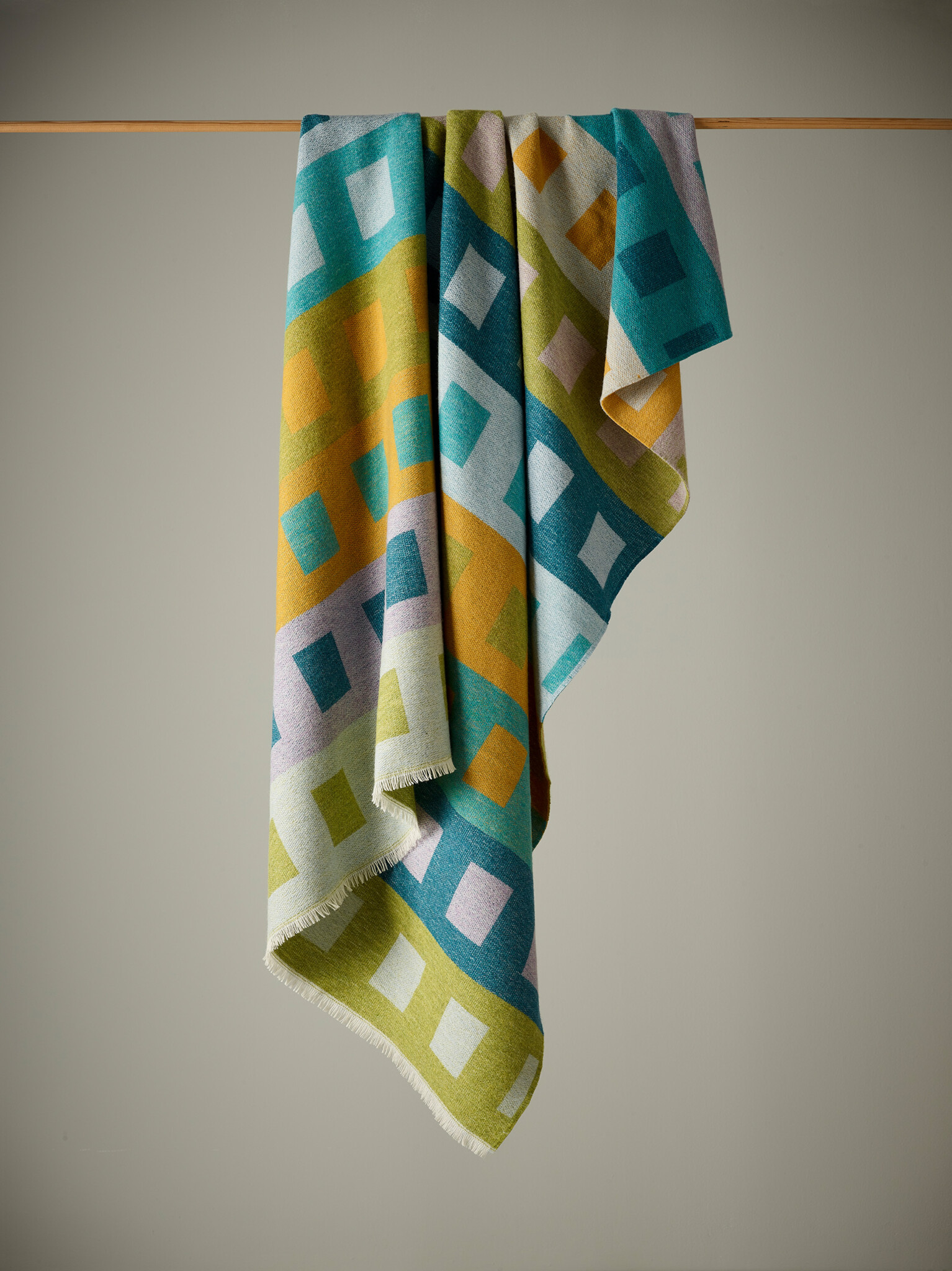
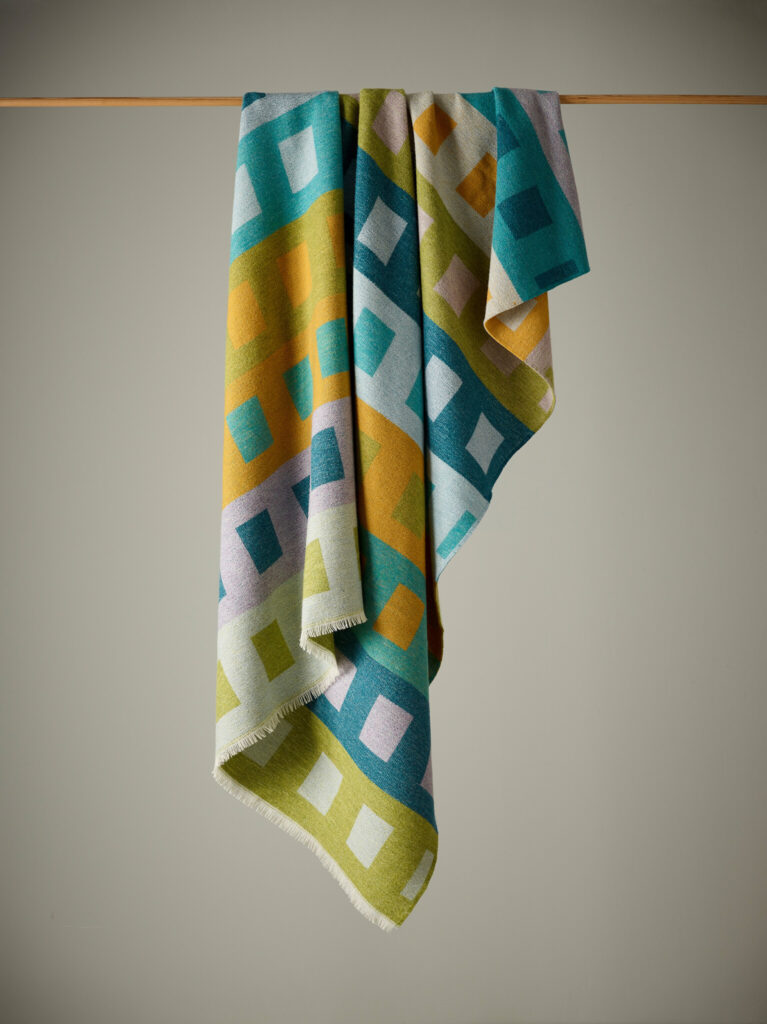
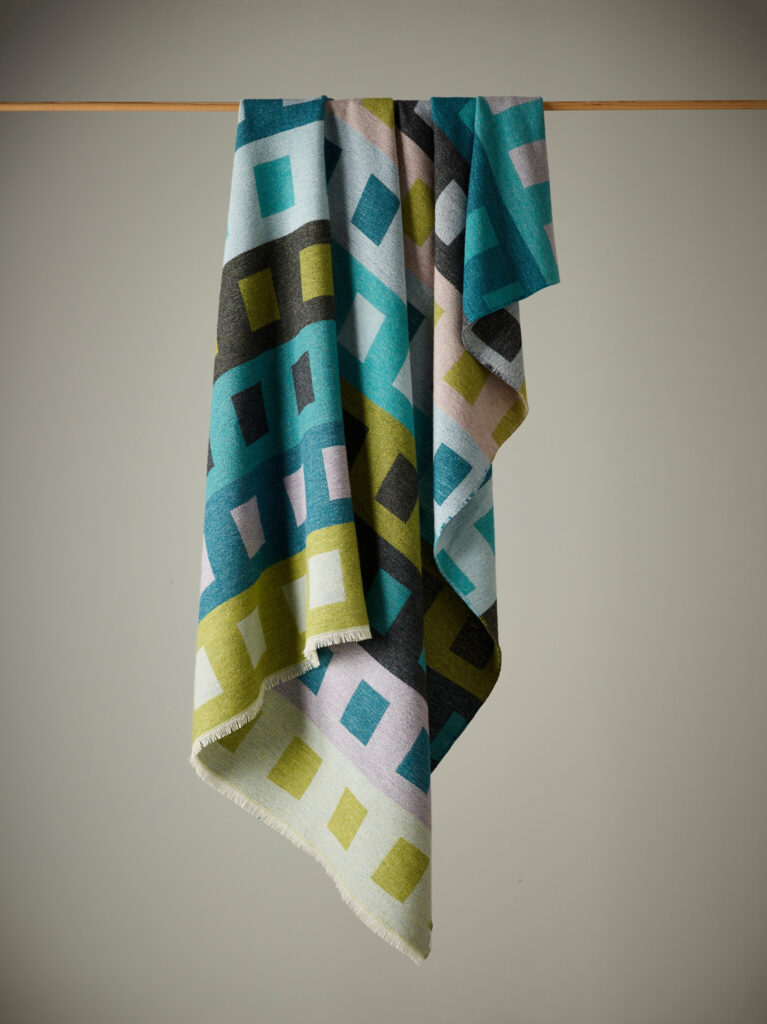
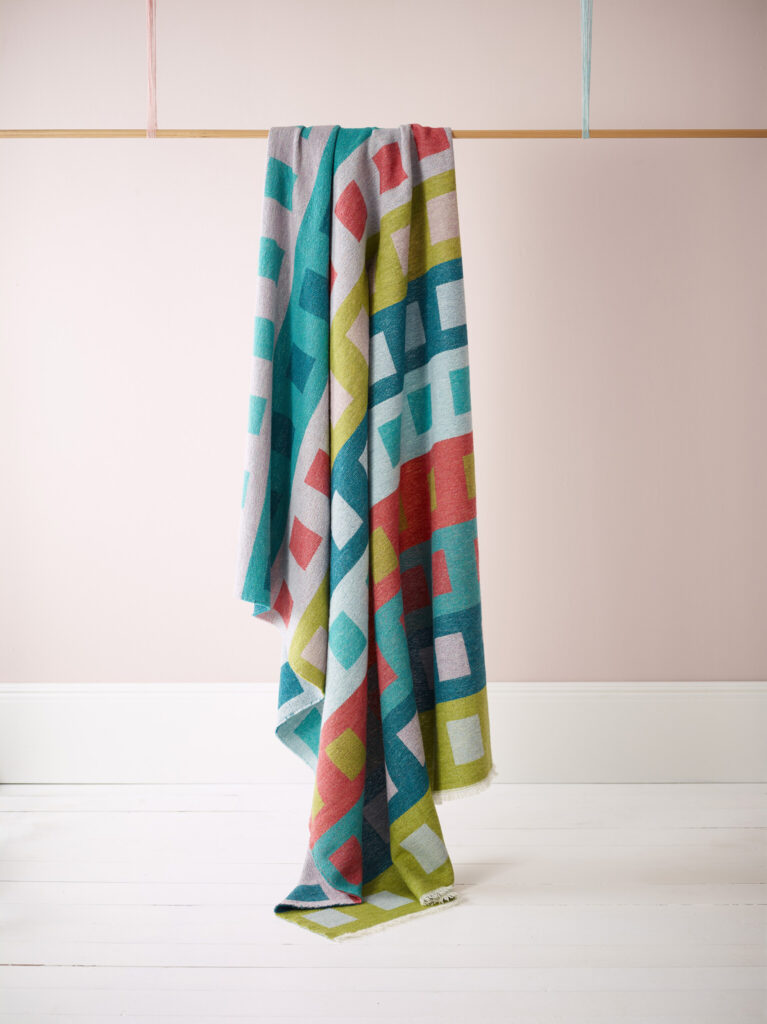
I’m delighted that, quite by accident, the 2020 version of The Bristol Blanket has been aptly named for more than one reason. I’m also equally delighted that the success of the original design has enabled me to bring more warmth and uplifting colour to homes in a new collection.
The rug weaving technique that inspired the colour blocks in the blanket is called Summer and Winter, and this subsequently inspired a summer version of the blanket with a joyful yellow, and winter, with a classic slate grey.
Whatever the weather, most of us have taken to turning our heating down in recent times, for both ecological and economic reasons. There’s never been a better time to invest in a quality woollen blanket for your home, and knowing that 10% of the profits from sales of The Bristol Blanket go to Mind-the mental health charity, is another good reason to choose this uplifting design.
Which season are you? Summer, Winter, or Original?
The official launch of these new colours is Spring 2022.
But if you like being ahead of the pack I’m offering an early-bird discount. Simply select SUMMER or WINTER from my online shop. Then use the code EARLYBIRD22 to receive a whopping 20% off your blanket. They’re available for immediate posting so will be with you in a matter of days.
Bristol Blanket-Summer Photo: Article Studio
Bristol Blanket-Winter Photo: Article Studio
The Bristol Blanket – Original Photo: Article Studio
Who invented the blanket? By Eugene Byrne January 2012
Bristol’s most colourful Victorian newspaperman, Joseph Leech, wrote an extremely fanciful account of the blanket’s invention/discovery. In a story in Brief Romances from Bristol History (1884, a collection of what were originally articles in the Bristol Times) he imagined ‘Edward’ Blanket struggling to make his weaving business a success. One very cold night he and Mrs. B were shivering in their bed covered only by a ‘camlet’ of goat hair. Then he had an idea; he went to his loom and took a length of woollen cloth he had been working on that day, and covered the bed with it. They slept snugly, and the following morning he told Mrs. Blanket that he was going to go into the bed-covering business.
“My dearest dame,” said he, “I shall have the honour of giving a name to the article that will make my fortune and carry down my name to all future ages. Let others devote themselves to making cloth to keep them warm by day; be it my business henceforth to manufacture only that which will keep folks warm by night.”
Leech went on to call for an annual Blanket Day, in which Bristol would celebrate Mr. Blanket’s most excellent discovery/invention.
Of course, the whole idea of the blanket being invented here is just a particularly bovine bit of local nominative determinism. The idiot and famously unimaginative ancestors leaping to a ridiculous conclusion, eh?
Well, yes, probably. But not definitely …
The words ‘blanket’ and ‘blanchette’ (plus assorted other medieval spellings) had been in use for at least 150 years before Edmund Blanket’s time. The Blanket family themselves might have got their name from being makers of this cloth, just as medieval blacksmiths acquired the surname Smith, and bakers became Bakers.
However, if you look closely enough, the idea of woollen bed-coverings being invented, or at least popularised, by a Bristolian is not completely ridiculous. It might, just might, have happened.
Only it wasn’t Edmund Blanket who did it. It was Thomas Blanket, who was Edmund’s brother, or possibly his father. Or maybe his son.
Weaving was medieval Bristol’s main industry, underpinning most of the town’s seaborne trade. It was tightly regulated by the guilds and the corporation to maintain the quality of the finished cloth and protect the interests of the weavers and associated trades.
King Edward III (reigned 1327-1377) started to change all that. He wanted the vast English cloth industry to be more profitable, all the better to tax it to pay for his wars. He restricted the wearing and importation of foreign cloth and the export from England of raw wool. He encouraged Flemish weavers to settle in England to build up the cloth industry. Some of them came to Bristol; the Blankets may have been Flemish themselves, or they may have brought in some of these foreign weavers.
In the late 1330s, Thomas Blanket set up several looms at his property in Tucker Street, just south of the Bristol Bridge. He was effectively setting up a factory, employing weavers rather than working as a self-employed artisan. Presumably, his weavers hadn’t had to serve long apprenticeships in the traditional manner. The guilds and the Corporation didn’t like this and tried to put a stop to it.
Immediately, however, word came back from the King saying that Blanket was not to be impeded in any way:
“The said Thomas and the others who have chosen to work and make cloths of this sort, and also the workmen, should be protected and defended from injuries and improper exactions on that account. Order you, that you permit the said Thomas and the others who are willing to make cloths of this kind to cause machines to be erected in their own houses at their choice for the weaving and making cloths of this kind … “
The direct personal support of the king means Blanket was no mere clothier, but a very significant figure. The Corporation got the message and hurriedly performed a u-turn, and Thomas Blanket was made a local official in 1340. Blanket’s importance and royal support would have made him a well-known figure.
We don’t know how people slept in the 14th century. Most poor people probably slept on the floor (perhaps on straw), fully or partially clothed, though getting completely naked to sleep was often favoured where possible as it helped get rid of the lice which infested most of our ancestors’ bodies.
The more prosperous classes owned beds and may have slept in linen sheets under animal skins. Woollen cloth, meanwhile, was expensive stuff, produced by artisans … Until ruthless entrepreneurs like Thomas Blanket came along.
Blanket’s industrial production methods, however small they were by modern standards, may well have gone some way towards making woollen bed-coverings more affordable and fashionable. It’s possible that they became known by the name of the family who was making them.
There’s another intriguing scrap of circumstantial evidence from Witney in Oxfordshire. Witney was famous in the 19th and 20th centuries as the centre of Britain’s blanket industry. Until the duvet came along, almost everyone in Britain went to sleep under Witney blankets. Two separate 19th-century histories of Witney both credit the invention of the blanket to “Thomas Blanket” or “Thomas à Blanket” of Bristol. (Giles, J.A.; History of Witney (J.R. Smith, London, 1852) and Monk, W.J.; History of Witney (J. Knight, Witney, 1894))
The good folk of Witney would have no reason to credit the main source of their prosperity to a Bristolian unless there was a strong local legend there, too.
So then, in summary: Few people, if any slept under woollen blankets until they became affordable and/or fashionable. Thomas Blanket’s industrial production methods would certainly have brought down the price of woollen cloth. He was a minor celebrity who was known throughout the land, and he was credited with inventing blankets not just in Bristol, but in the Oxfordshire village where their manufacture would become the main local industry.
Nope, we can’t yet definitively prove a Bristolian named Blanket invented woollen bedclothes. But I don’t think there’s any definitive proof that he didn’t either.
In the Studio Photo: Alice Jane Hendy Photography
Angie Parker is a weaver, designer, and colourist, based at BV Studios in Bedminster. She trained in rug weaving in the 1990s and started her textile practice in 2014. Her latest collection of handwoven designs and small-batch-produced textiles are available in her online shop. Subscribers to her newsletter are the first to see new designs and also get access to special offers and exhibition news. Sign up here to keep in the loop.
When the once-in-a-lifetime opportunity to purchase the entire contents of the Collingwood rug weaving workshop came up, my gut instinct, without much hesitation, was to snap it up.
Admittedly, the UK’s most prominent and successful rug weaver, Jason Collingwood, announced his retirement a little sooner than I had expected. I wasn’t quite ready, but it was only a ‘small’ matter of logistics.
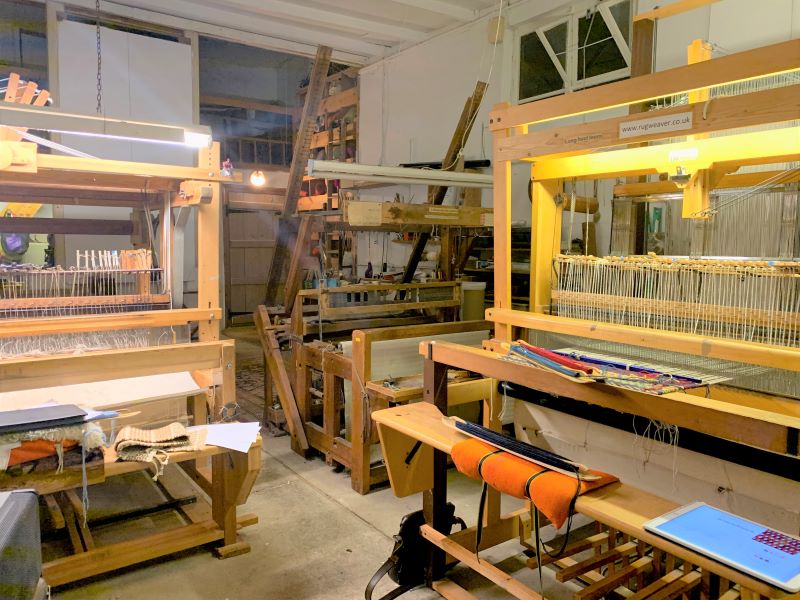
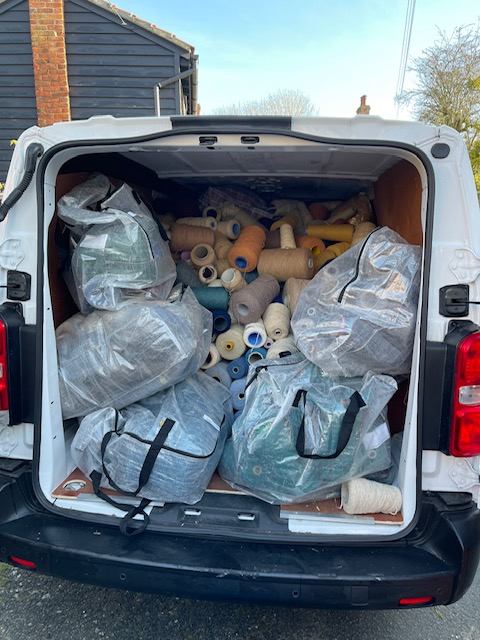
I simply had to move three full-size looms, all the additional equipment, and approximately 2 tonnes of yarn from Nayland in Colchester, to my shared studio space in Bristol. Only that! Oh, and the sampling loom made from a piano! Fortunately, the reality has allowed this to happen in stages, so much less overwhelming.
Three looms in the Collingwood workshop-Nayland. Photo: Theo Rooden
Serendipity
There were signals from the onset that this was the right move.
Firstly, I’d set my heart on one day owning the Harrisville shaft switching loom after weaving a rug on it in 2014. I voiced this intention at the time, and possibly a few times since, which put me at the top of the list when Jason decided to sell up. (Does anyone reading know if there are any more of these looms in the UK?)
The fact that I could make the figures work was obviously the biggest factor.
Initially, I expected to move my workshop to new premises for more space. However, in a serendipitous twist, the two adjoining spaces in my studios became available (was it something I said?), and I was able to expand without having to move.
It’s a bit of a squash and a squeeze and it certainly ain’t ‘Instagram pretty’, but it’s working for me and I love being at BV Studios. I can walk to work and it’s filled with so many amazing artists and friends.
Closing a chapter and cobwebs
The move is taking longer than originally estimated, but personally, I think this is better than an abrupt end to this chapter. There’s so much weaving history and some incredible cobwebs in The Old School and I’m conscious to be respectful of what came before. Two more trips should cover it though and I’ll miss my 24-hour mini-breaks driving a white van.
In the meantime, I’m knuckling down to some intense core strengthening and some hardcore rug weaving. And whilst I’ve no inclination, nor the skill set to emulate the prolific business model used by the looms previous owners, I do have productivity targets that require an improved level of stamina and endurance. (Note to self-Time to Plank).
Insane or savvy?
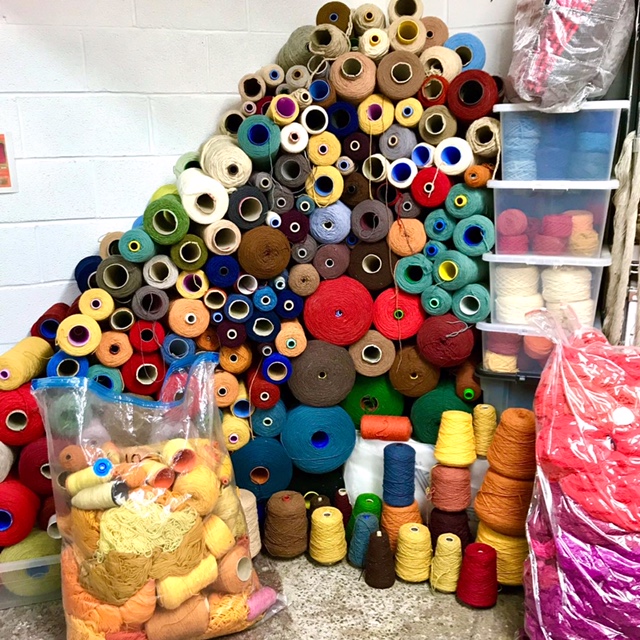
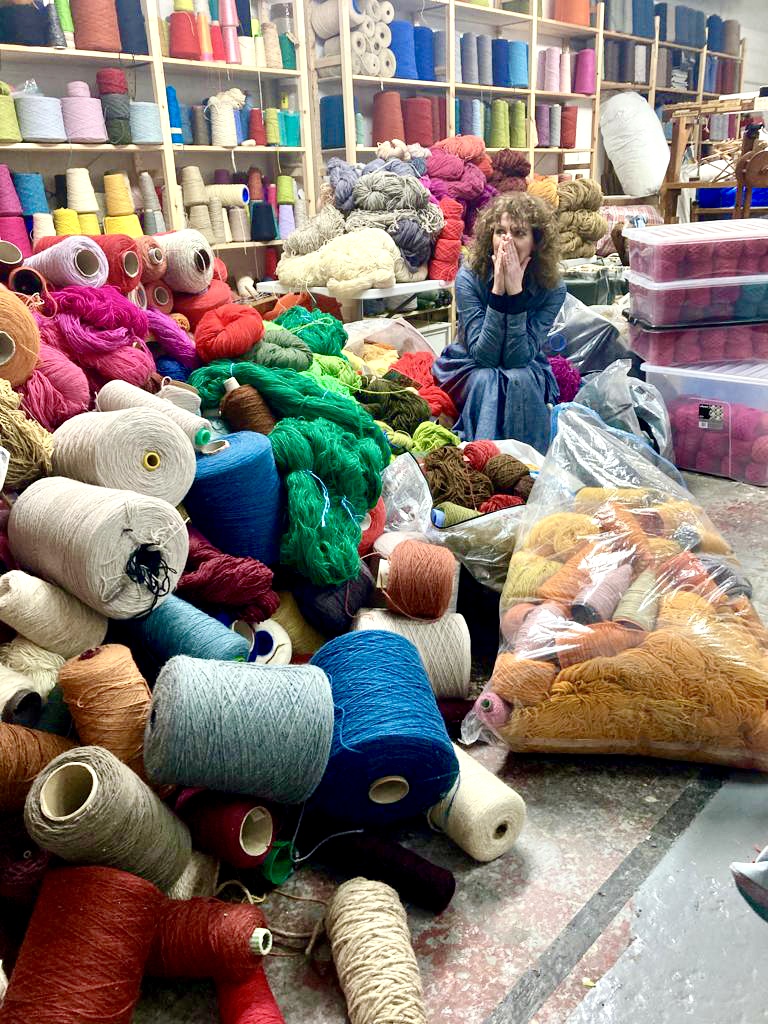
And the wool… Yes, let’s not gloss over the wool-shaped elephant in the room. A wise friend advised me not to go near it, but I’m trusting my gut instincts as they’ve served me well so far, and a deal’s a deal.
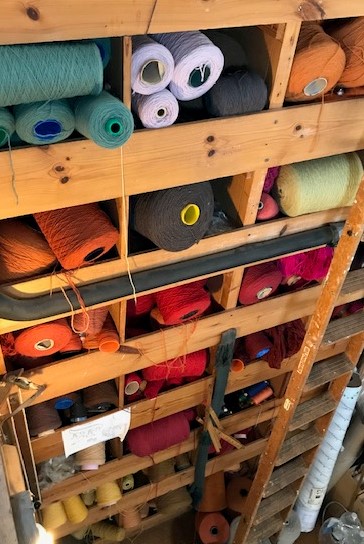
One section of the wool storage in the Collingwood workshop.
Ridiculous…
That said, my inner critic is screeching expletives on a regular basis about the ridiculous amount of yarn I’ve just transported across the country. Luckily, my inner advocate is louder, and I’m reminding myself that I now have the option to grow my business without buying new raw materials…ever again!
I’ll also try to sell what I don’t need over the coming months so drop me a line if you’re in the market for some good quality sustainable wool.
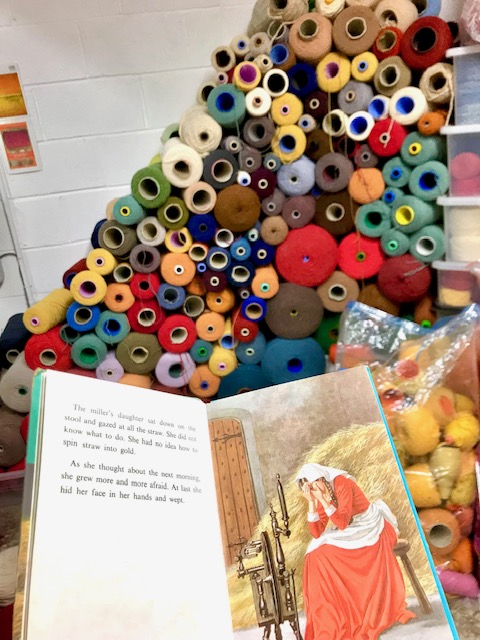
Life is a fairytale…by the brothers Grimm. Illustration: Vera Southgate
Yes, right now I feel I’m playing all the key roles in a weaving version of Rumpelstiltskin, although fortunately, no infants need to change hands in return for weaving this heap of wool into rugs.
There’s plenty more to share about my plans for this unusual business move. It feels nuts to be surrounded by more wool than I’m ever likely to weave, and so many looms.
However, it also feels right that this special collection of looms is staying together for the time being, and I’m looking forward to the time when I can open my studio doors for other weavers to use them, while I (to coin someone else’s phrase), pick up the baton to take on the world…one rug at a time. That should be shuttle really, shouldn’t it?
Angie Parker is a weaver, designer, and colourist, based at BV Studios in Bristol. She trained in rug weaving in the 1990s and started her textile practice 8 years ago. Subscribers to her newsletter are the first to see new designs and also get access to special offers and exhibition news. Sign up here to keep in the loop.